How to Know if a Tree Is at Risk of Falling
That oak in your backyard has been leaning a bit more each winter, and now you’re wondering if it’s safe or if you should start planning for removal. Homeowners across Connecticut and New York often face this exact scenario, noticing subtle changes in their trees after storms, freeze-thaw cycles, or just gradual aging that raises concerns about property damage and safety. The question of tree falling risk becomes especially pressing when you spot mushrooms growing at the base, notice cracks in the trunk, or see that the ground around the roots seems to heave after heavy rains. Northeast conditions like saturated soils, compacted clay from construction, and storm-driven wind exposure can destabilize even mature specimens near homes and driveways. Understanding the warning signs helps you act before a tree becomes an emergency, while knowing what to expect during professional assessments and removal keeps you prepared for timelines, permits, and yard restoration. These factors shape how quickly you can address a hazard, from initial visual checks that take just hours to full evaluations with specialized tools that may extend over days when zoning approvals come into play. Recognizing when your property needs a certified arborist’s attention, and what that process actually involves, takes the guesswork out of protecting your home and landscape.
Key Takeaways
- Tree Assessments Span Hours to Days in CT/NY: Basic visual inspections typically require 1 to 2 hours, while comprehensive evaluations using diagnostic tools can take a full day, and permit processes may extend timelines by 1 to 2 weeks depending on local zoning requirements.
- Roots and Trunks Signal First: Exposed root systems with soil heaving, buried trunk flares, or fungal growth at the base demand professional probing to assess structural integrity against Northeast erosion and soil conditions.
- Visual Checks Avoid Surprises: Measuring lean angles, scanning for crown dieback, and documenting recent changes help flag imminent tree failure likelihood early, aligning with DEEP guidelines for hazard identification.
- Risk Rating Guides Action: Industry-standard matrices from ISA and ANSI weigh failure probability, target impact zones, and tree size to prioritize low-risk versus high-risk scenarios requiring immediate attention.
- CT/NY Permits Vary: Zoning boards often require permits for large-diameter removals (processing takes 10 to 30 days), though hazard exemptions can speed urgent cases when documented properly through state forestry programs.
- Removal Minimizes Disruption: Standard tree removal duration ranges from 2 to 6 hours for most jobs, with stump grinding and reseeding restoring yards within 1 to 2 weeks after completion.
Understanding Tree Risk Assessment in CT and NY
Certified arborist hazard evaluation follows a structured sequence designed to handle the unique challenges of Northeast properties, where clay-heavy soils, frequent storms, and local regulations prioritize safety near structures while balancing environmental concerns. The process adapts to regional factors like freeze-thaw tree damage that heaves roots during winter months, storm saturated soils that destabilize shallow-rooted species such as maples and willows, and zoning tree permits that vary widely across Connecticut and New York municipalities. Connecticut spite tree laws limit malicious removals to prevent neighbor disputes, but property owners remain liable for known hazards that could fall onto adjacent land, making proactive assessments both a safety measure and a legal safeguard. Wetland buffers add erosion control practices to evaluations in sensitive zones, requiring arborists to consider drainage patterns and root stability alongside visible trunk decay symptoms or crown dieback indicators. These considerations ensure that tree hazard assessments address not just the specimen itself but the surrounding environment, targets like homes or power lines, and regulatory requirements that shape timelines from initial inspection through final removal or mitigation.
Local Tree Environment and Assessment Needs
Regional storms bring sustained rainfall that saturates soils, reducing the anchoring capacity of root systems and increasing the likelihood of windthrow, especially for trees with shallow or compromised roots. Root compaction from construction, driveways, or heavy foot traffic further weakens structural support, requiring arborists to probe for trunk flare visibility and assess whether adequate root mass remains intact below grade. Initial scans focus on leaning tree dangers by measuring angles with plumb lines or inclinometers, checking for soil cracks or heaving on the uphill side that indicate root plate movement, and noting any recent shifts after wind events or heavy precipitation. Urban properties face additional setbacks from overhead utilities, nearby structures, and limited equipment access, factors that arborists account for when planning removal or stabilization work. Connecticut’s DEEP guidelines recommend addressing dead or dying trees near recreation areas and high-traffic zones first, categorizing them as immediate hazards if failure could injure people or damage property. Adapting assessments to these Northeast-specific conditions means balancing visible signs like fungal growth trees or trunk decay symptoms with soil testing, drainage analysis, and target impact zones that determine the urgency and scope of intervention.
National vs. CT/NY Assessment Timelines
Standard tree risk rating processes across the country typically involve visual inspections lasting 1 to 4 hours for straightforward cases, but Connecticut and New York properties often require extended evaluations due to soil variability, permit coordination, and heightened scrutiny for hazardous tree signs near homes or public spaces. Regional assessments may stretch to 4 to 8 hours when arborists deploy diagnostic tools like resistographs to measure internal decay depth, sonic tomography to map cavities, or root collar excavation to expose buried flares and confirm anchor integrity. Permit timelines add another layer, with zoning boards in many CT towns mandating applications for trees exceeding 10-inch caliper, a process that can span 1 to 2 weeks for review, public notice periods, and approval before work begins. Mature hazards, those large specimens with significant crown dieback indicators or advanced fungal growth, demand comprehensive reports detailing failure likelihood, target zones, and mitigation options, often requiring a day or more for data collection and analysis before presenting recommendations to homeowners. These extended timelines reflect the thoroughness needed to address Northeast tree risks accurately, ensuring that decisions account for soil conditions, storm history, and legal obligations that shape both the assessment and the subsequent action plan.
Typical Timeline Ranges by Tree Size
Smaller trees under 24 inches in diameter generally receive quicker evaluations, with visual checks and basic risk ratings completed in 2 to 4 hours using handheld tools and standardized matrices from industry protocols. Larger specimens, particularly those over 36 inches or near critical targets, require more intensive scrutiny, including advanced diagnostics that can extend on-site work to a full day plus follow-up permit coordination. Connecticut’s forestry programs emphasize thorough documentation for mature trees, noting that removals often involve crane setups, traffic control, and utility notifications that add planning time beyond the assessment itself. New York City’s forestry risk management protocols similarly prioritize detailed evaluations for trees in high-use areas, aligning with ISA tree risk rating standards that weigh failure probability against the consequences of impact. Homeowners should expect that complex cases, such as multi-stemmed trees with co-dominant trunks, specimens with extensive root damage, or those in tight urban lots with limited access, will fall on the longer end of these ranges, sometimes requiring multiple site visits to gather data and finalize recommendations.
Phase-by-Phase Breakdown Models
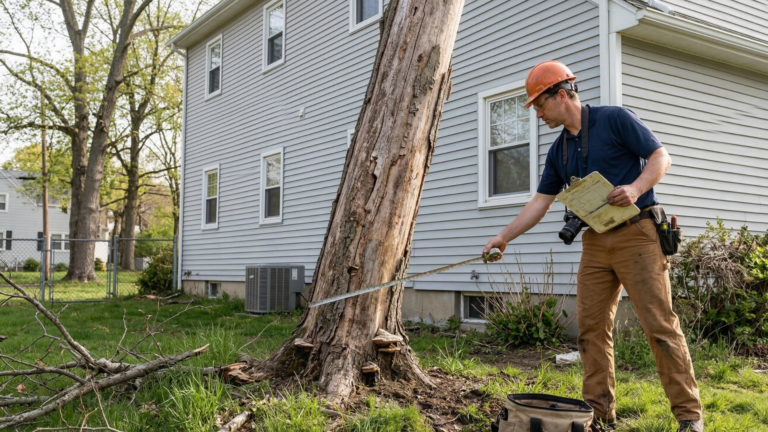
Professional assessments typically unfold in three distinct phases, each building on the previous stage to refine the understanding of tree falling risk and guide appropriate action. Phase 1 involves visual inspection lasting 1 to 2 hours, where the arborist walks the property, examines the tree from all sides, measures lean angles, inspects the root collar and trunk for fungal growth or cavities, and scans the crown for dieback or structural defects like included bark. This initial pass identifies obvious concerns and determines whether advanced diagnostics are warranted, often concluding with a preliminary risk rating based on observable conditions and target proximity. Phase 2 incorporates tools and detailed risk rating, consuming an additional 2 to 4 hours as the arborist probes for trunk decay depth using resistance drilling, maps internal voids with sonic equipment, excavates soil to verify root flare exposure, and applies standardized matrices to assign a final risk category from low to extreme. The third phase produces a written report outlining findings, photographs, and a mitigation plan, which may include pruning to reduce canopy load, cabling or bracing for structural support, or full removal if the tree poses imminent danger. This reporting stage can span 1 to 2 days depending on complexity, and if permits are required, the timeline extends by another 1 to 2 weeks as applications move through municipal review processes, public comment periods, and final approvals before work can commence.
Key Signs and Steps in Tree Risk Evaluation
Core indicators of tree failure likelihood provide the foundation for accurate hazard assessments, guiding arborists through a systematic review that starts with visible symptoms and progresses to sub-surface and internal diagnostics when necessary. Connecticut and New York professionals follow standards aligned with DEEP forestry guidelines and NYC Parks risk management protocols, ensuring consistency in how they identify and prioritize hazards across diverse property types. Common species in the region, such as red oaks, sugar maples, white pines, and ashes weakened by emerald ash borer, each present unique failure patterns, from brittle oak limbs that snap under ice load to maple roots that buckle sidewalks in compacted urban soils. Recognizing these species-specific traits helps arborists tailor their inspections, focusing on the most likely points of failure and the environmental stressors that exacerbate structural weaknesses. The evaluation sequence moves from general observations to targeted tests, building a comprehensive picture of the tree’s condition, the likelihood that a significant part will fail, and the potential consequences if that failure occurs near people, structures, or high-traffic areas.
Visual and Root Inspection
Measuring lean with a plumb line or digital inclinometer establishes a baseline, with angles greater than 15 degrees from vertical raising concern, especially if the lean developed recently or shows signs of soil upheaval on the opposite side. Leaning tree dangers increase when roots on the compression side crack or lift the ground, indicating that the anchor system is compromised and may not withstand additional wind or saturated soil conditions. Trunk flare burial, where the base appears to emerge directly from the ground without the characteristic buttressing swell, suggests improper planting depth or soil accumulation over time, both of which suffocate roots and promote decay at the root collar. Arborists probe the area around the trunk, clearing away mulch, leaf litter, and excess soil to expose at least 4 to 6 inches of the flare, confirming that the root system has adequate structure to support the crown. Root damage becomes evident through heaving, cracks radiating outward from the trunk, or exposed roots that have been severed by construction, trenching, or erosion, all of which reduce stability and signal elevated risk. Soil heaving roots often accompany recent lean changes, creating visible mounds or depressions that indicate the tree is shifting in the ground, a condition worsened by freeze-thaw cycles that push roots upward and loosen their grip in the soil matrix.
Trunk, Crown, and Decay Checks
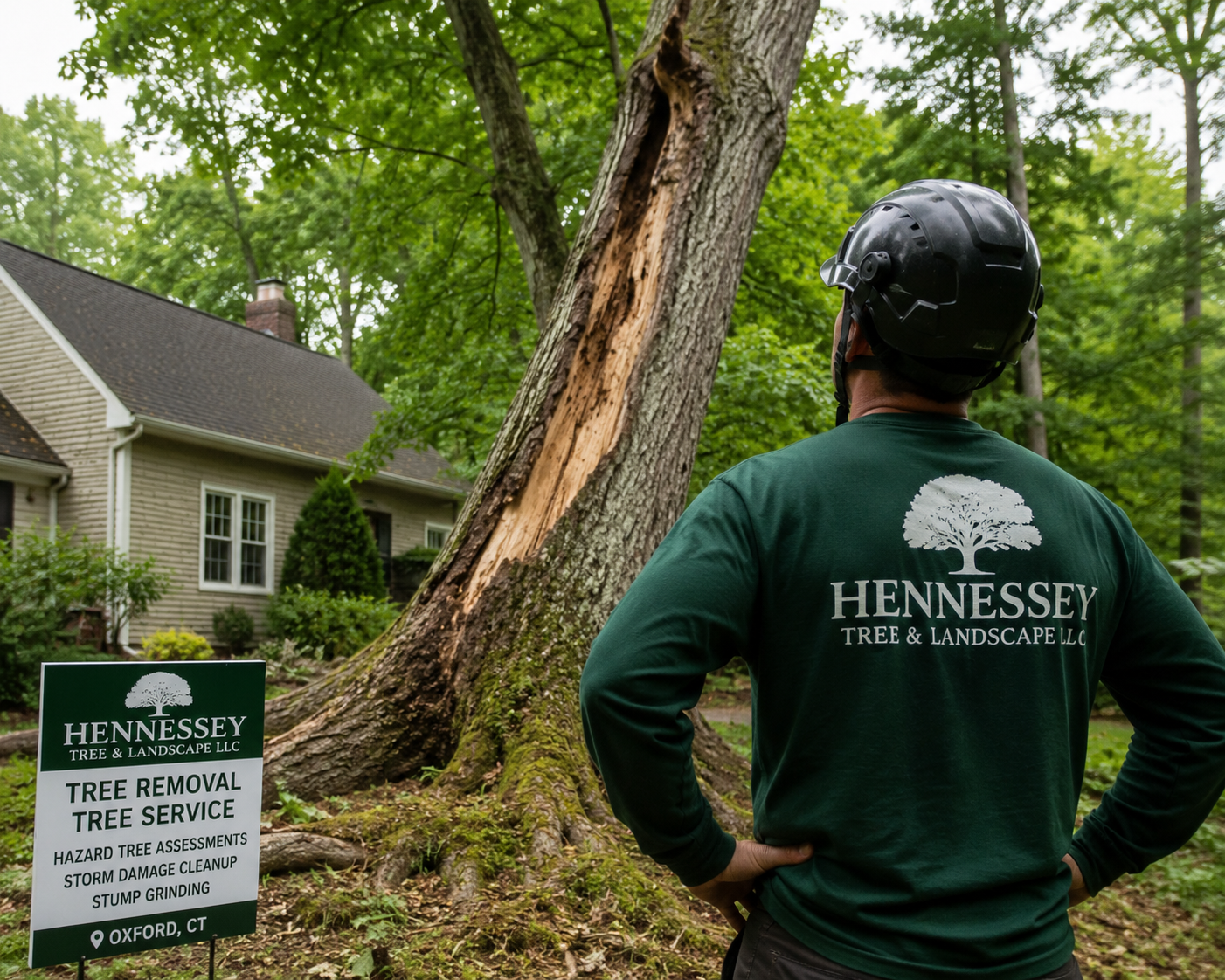
Fungal growth trees, particularly shelf mushrooms, conks, or other fruiting bodies at the base or on the trunk, point to active decay inside the wood, where fungi have colonized dead or dying tissue and compromised structural integrity. Arborists note the species of fungus when possible, as some like artist’s conk indicate extensive heart rot, while others signal surface-level sapwood decay that may be less critical depending on the tree’s size and load. Trunk decay symptoms extend to visible seams, cracks running vertically along the trunk, or open cavities where bark has peeled away, exposing hollowed interiors that reduce the tree’s ability to withstand bending forces from wind or ice. Crown dieback indicators, defined as branches with no living buds or foliage over multiple growing seasons, suggest systemic stress from root disease, vascular blockage, or environmental decline, often progressing from the outer canopy inward as the tree sheds non-essential limbs. When over 50 percent of the crown shows dieback, the tree’s capacity to recover diminishes, and the remaining live wood may not sustain the mechanical loads imposed during storms or heavy snow. Heavy fruit production, sometimes called stress cropping, occurs when a declining tree redirects energy into reproduction, a biological response that can overload branches and indicate underlying health problems. Resistograph testing, which drills a fine probe into the trunk and measures the resistance encountered as it passes through sound wood versus decayed zones, provides quantifiable data on the extent and depth of internal rot, helping arborists decide whether the tree can remain standing or requires removal.
Additional Factors for High-Risk Trees
Full evaluations adapt to challenges that go beyond routine inspections, accounting for site-specific variables that elevate risk or complicate mitigation efforts across Northeast properties. Storm impact, saturated clay soils that lose cohesion after prolonged rain, and proximity to high-value targets like homes, garages, or power lines all influence how arborists rate and prioritize hazards. Trees located in areas with poor drainage or compacted soils from construction face heightened instability, as root systems struggle to anchor effectively in waterlogged or oxygen-deprived substrates. Northeast tree risks also include ice storm damage, where accumulated weight snaps limbs or splits multi-stemmed trunks, and nor’easter winds that test the structural limits of even healthy specimens. Advanced assessments may require additional site visits, crane planning consultations to determine equipment access and rigging points, and coordination with utility companies if lines run through the canopy or near the drop zone. These factors add complexity and time to the evaluation process, sometimes extending on-site work by a day or more as arborists gather data, test alternative approaches, and develop mitigation plans that balance safety, cost, and landscape preservation goals.
Handling Storms, Soils, and Targets
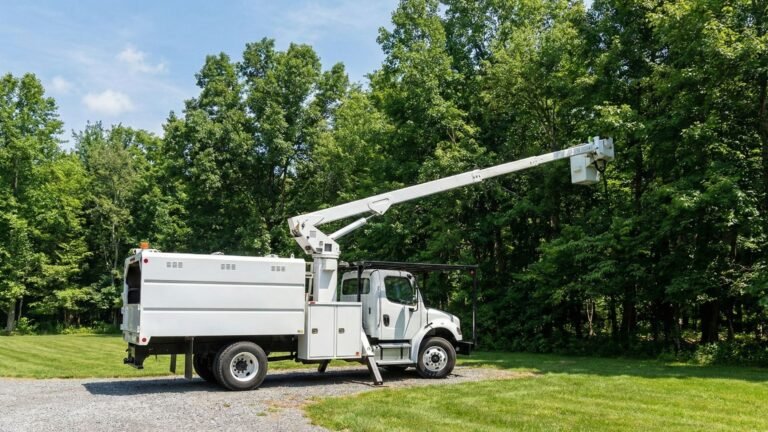
Saturated clays common in Connecticut and New York valleys reduce soil shear strength, making it easier for root systems to pull free during windstorms or when the crown becomes top-heavy with foliage and moisture. Post-rain inspections often reveal newly developed lean, fresh cracks around the trunk base, or exposed roots where the soil has eroded away, all signs that recent weather has destabilized the tree. Target impact zones, the areas directly beneath or adjacent to the tree where failure would cause damage, receive heightened scrutiny, with arborists noting the distance from the trunk to structures, the orientation of the lean, and the typical fall radius for the tree’s height and canopy spread. Homes, detached garages, sheds, driveways, sidewalks, and utility lines all qualify as high-consequence targets, elevating the risk rating even if the likelihood of failure is moderate. Crane planning enters the equation for large removals in confined spaces, where the arborist must map overhead clearances, ground access for heavy equipment, and rigging anchor points to safely dismantle the tree in sections without dropping material onto sensitive areas. This planning phase, which may include site measurements, load calculations, and consultations with crane operators, can add an extra day to the evaluation timeline, ensuring that once work begins, the removal proceeds efficiently and safely. Northeast properties with steep slopes, wetland buffers, or dense understory vegetation require erosion control practices during and after removal, preventing soil runoff that could damage adjacent landscapes or violate environmental regulations.
Mitigation Planning and Removal Prep
Pruning to reduce canopy load, cabling or bracing to support weak unions, and root zone aeration to improve soil conditions represent first-line strategies when full removal isn’t immediately necessary but risk factors warrant intervention. Selective pruning removes dead or overextended limbs, lowering wind resistance and reducing the chance that heavy branches will snap and cause collateral damage during storms. Structural support systems, such as steel cables installed between co-dominant stems or dynamic bracing rods that allow controlled movement, stabilize defects without eliminating the tree entirely, extending its safe lifespan while monitoring for changes. When removal becomes unavoidable, stump grinding follows, typically boring 12 to 18 inches below grade to eliminate the root crown and prevent resprouting, leaving wood chips that can be removed or incorporated into the landscape as mulch. Reseeding or sod installation completes yard recovery timeline, with grass germination occurring within 1 to 2 weeks under favorable conditions, restoring the area to a usable state relatively quickly. Homeowners often ask about tree removal duration for the entire process, from initial assessment through final cleanup, and the answer depends on tree size, complexity, permit delays, and site conditions, but most standard jobs wrap up within a week once approvals are in place.
Permits, Laws, and Regulations in CT and NY
Pre-evaluation legal alignment ensures that homeowners and arborists act within municipal codes, state forestry policies, and neighbor relations statutes that govern tree work across Connecticut and New York. Understanding zoning tree permits, hazard exemptions, and liability frameworks prevents costly delays, fines, or disputes that can arise from cutting without proper authorization or neglecting known dangers. Connecticut towns vary widely in their requirements, with some mandating permits for any tree over 8 inches in diameter, others setting thresholds at 10 or 12 inches, and a few imposing no restrictions on private land outside of conservation or historic districts. New York municipalities operate under similar patchwork regulations, with New York City enforcing strict oversight for street trees and parkland specimens while suburban counties leave most decisions to property owners unless the tree sits in a designated scenic corridor or wetland buffer. Connecticut General Statutes address neighbor tree liability, holding owners responsible for damage caused by falling trees if the owner knew or should have known about the hazard and failed to act, a standard that underscores the importance of documented assessments and timely mitigation. Spite laws further complicate the picture, prohibiting the cutting or severe pruning of trees solely to annoy a neighbor or obstruct their view, though these provisions rarely apply to legitimate safety concerns. Navigating this regulatory landscape requires checking local ordinances, consulting with town tree wardens or zoning officials, and ensuring that any planned removal aligns with both safety priorities and legal obligations.
Zoning and Hazard Coordination
Connecticut DEEP permits for large-diameter trees often require submission of a site plan, photographs, and a written justification explaining why removal is necessary, with review periods ranging from 10 to 30 days depending on the municipality and whether public notice or hearings are mandated. Hazard trees that pose imminent danger, documented through certified arborist reports showing high failure probability and target proximity, may qualify for expedited processing or outright exemptions, allowing work to proceed without the standard waiting period. Town foresters or conservation commissions review applications, weighing factors like tree health, species, ecological value, and alternative mitigation before granting approval, sometimes imposing conditions such as replanting or erosion control measures. NY spite tree laws cap malicious actions, but once a tree is identified as a hazard through proper assessment, owners have a duty to address it or risk liability if it falls and causes harm. Public trees, those on sidewalks, parks, or municipal property, follow separate protocols, typically requiring 14-day advance notice posted on-site and notification of adjacent property owners before removal, a timeline that mirrors best practices for private land in sensitive areas. Coordinating with utility companies when lines run through or near the tree adds another step, as most providers require notification and may dispatch crews to de-energize or relocate wires before arborists begin work, a process that can delay the start by several days but ensures safety throughout the operation.
What Homeowners Should Prepare For and Do
Facilitating smooth assessments starts with understanding what arborists need to access and evaluate, allowing the process to proceed efficiently without repeated visits or delays. Homeowners play a key role in preparing the site, documenting observations, and communicating concerns that might not be immediately visible during the initial walkthrough. Simple steps like trimming low underbrush around the tree base, clearing pathways for equipment, and noting any recent changes such as branch drops, soil cracks, or pest activity provide valuable context that sharpens the assessment and helps the arborist prioritize diagnostic efforts. Being present during the evaluation, especially when tools like resistographs or root excavation come into play, allows homeowners to ask questions, see findings firsthand, and participate in discussions about risk ratings and mitigation options. This collaboration ensures that the final recommendations align with the property owner’s goals, budget, and timeline, whether that means scheduling prompt removal, implementing structural support, or monitoring the tree over successive seasons to track changes.
Daily Expectations During Evaluation
Access requirements limit the scope of Day 1 visuals, as arborists need clear sightlines to the trunk, root zone, and full canopy from multiple angles, which may involve moving vehicles, lawn furniture, or stored equipment that blocks views or paths. Homeowners should expect the arborist to spend time measuring, photographing, probing the soil, and testing suspect areas with hand tools, all while taking notes that will inform the written report and risk rating. Tool demonstrations, such as resistograph drilling or sonic tomography, offer a chance to observe how internal decay is assessed, with real-time data displayed on screens or printouts that show sound wood versus compromised zones. Report review sessions typically occur at the end of the visit or within a few days afterward, presenting findings, risk categories, and recommended actions in plain language, often supported by annotated photos and diagrams that clarify where defects exist and why they matter. These reviews also cover cost estimates for removal, permits, or mitigation work, giving homeowners the information needed to make informed decisions and plan next steps without pressure or confusion.
Tips to Minimize Yard Disruptions
Trimming underbrush pre-visit clears obstructions and reveals the root collar, making it easier for the arborist to inspect for fungal growth, flare burial, or heaving without spending time on preliminary site prep. Photo documentation of the tree’s lean, crown condition, and any visible defects provides a dated record that supports permit applications, insurance claims, or neighbor communications should disputes arise about the tree’s history or risk status. Marking utility lines, underground sprinkler systems, and septic components on the property helps arborists plan equipment placement and stump grinding work to avoid costly damage during removal, a proactive step that saves time and expense. Communicating access limitations, such as narrow gates, overhead wires, or soft ground that might not support heavy machinery, allows the arborist to bring appropriate equipment or schedule work during drier periods when soil conditions improve. Homeowners who share their observations about how the tree has changed over months or years, noting growth patterns, storm damage, or pest infestations, contribute valuable context that enhances the assessment and ensures nothing is overlooked in the final evaluation.
Process Comparison Table: Basic vs. Advanced Tree Risk Assessment in CT/NY
| Phase | Basic Visual (Small Tree) | Advanced Eval (Mature Hazard) |
|---|---|---|
| Initial Scan | 1 to 2 hours for walkthrough, lean measurement, and root collar inspection of straightforward cases | 2 to 4 hours incorporating diagnostic probes, root excavation, and detailed crown analysis for complex specimens |
| Risk Rating | Basic matrix application using visual cues, target proximity, and species characteristics | Advanced tools including resistograph data, sonic mapping, and multi-factor ISA matrices for precise categorization |
| Report/Mitigation Plan | Same-day verbal summary with photographic evidence and immediate recommendations | 1 to 2 days for comprehensive written reports with annotated images, permit documentation, and detailed action plans |
| Total Timeline | 2 to 4 hours from arrival to final recommendation for small, low-risk trees | 1 full day on-site plus 1 to 2 weeks for permit review and approvals before work authorization in regulated zones |
This comparison highlights how tree size, condition, and regulatory context shape the assessment process, guiding homeowners in setting realistic expectations for timelines and deliverables based on their specific situation.
Common Mistakes Homeowners Make During Tree Assessments
Ignoring a new or worsening lean after storms represents one of the most frequent oversights, as gradual changes can seem insignificant until a sudden failure occurs, causing property damage or injury. Homeowners sometimes assume that because a tree has stood for decades, it will continue to do so indefinitely, overlooking the cumulative effects of aging, decay, and environmental stress that erode structural capacity over time. Skipping professional arborists in favor of DIY assessments or relying on unlicensed tree services saves money upfront but often leads to inaccurate risk evaluations, improper removals, and liability exposure if the work causes harm or violates local codes. Neglecting zoning tree permits and attempting to cut without authorization can result in stop-work orders, fines, and mandatory replanting, especially in towns with strict tree protection ordinances or when the specimen sits in a conservation district. Delaying action after identifying hazardous tree signs, whether from indecision, budget concerns, or hope that the problem will resolve itself, increases the likelihood of failure and the potential for more extensive damage when the tree eventually falls. Homeowners also err by not documenting their concerns, missing the opportunity to build a case for hazard exemptions or to support insurance claims if the tree does fail and cause losses. Failing to communicate with neighbors about shared trees or those near property lines invites disputes and complicates removal logistics, particularly when roots or branches extend across boundaries and multiple parties have interests at stake.
Preparing Your Property for Tree Risk Assessment in CT/NY
Clearing paths to the tree base and creating unobstructed views of the trunk, root zone, and crown streamline the arborist’s initial inspection, allowing them to move efficiently through the visual phase without navigating obstacles or requesting that items be moved. Noting recent changes, such as branches that have dropped in the past few weeks, fresh cracks in the trunk, or new fungal growth, provides the arborist with a timeline that helps correlate visible symptoms with specific weather events or seasonal stresses. Checking Connecticut or New York state forestry websites before the assessment familiarizes homeowners with relevant regulations, permit requirements, and hazard tree policies, ensuring that conversations with the arborist proceed with a shared understanding of legal constraints and available resources. Gathering previous assessments, if any exist, along with photos from prior years, establishes a baseline that shows how the tree’s condition has evolved, supporting decisions about whether to monitor, mitigate, or remove. Homeowners should also prepare questions about timelines, costs, and permit processes, taking advantage of the arborist’s expertise to clarify what happens after the assessment and how long each phase of the work will take. Verifying homeowner association rules or deed restrictions that might limit tree work, especially in planned communities or historic districts, prevents surprises and ensures that any planned actions comply with all applicable covenants and ordinances.
Frequently Asked Questions About Tree Falling Risk in CT/NY
Q: What are the main signs a tree is at risk of falling?
A: The most reliable indicators include a pronounced lean greater than 15 degrees, soil heaving or exposed roots on one side, fungal growth at the base or on the trunk, trunk cracks or cavities, and crown dieback exceeding 50 percent of the canopy. Recent changes such as new lean angles after storms, fresh soil cracks, or sudden branch drops signal worsening conditions that warrant immediate professional inspection. Arborist evaluations in Connecticut systematically assess these signs using visual checks and diagnostic tools to determine failure likelihood and guide appropriate responses.
Q: How long does a tree risk assessment take?
A: Basic visual assessments for small trees typically require 2 to 4 hours, covering initial inspection, lean measurement, root collar examination, and preliminary risk rating. Advanced evaluations for mature or compromised trees extend to a full day or more when arborists deploy resistographs, sonic tomography, or root excavation to quantify decay and structural integrity. If permits are necessary, the total timeline stretches by 1 to 2 weeks as applications move through municipal review processes, though hazard exemptions may expedite urgent cases.
Q: Are permits needed to remove risky trees in CT/NY?
A: Permit requirements vary widely across Connecticut and New York municipalities, with many CT towns mandating applications for trees over 10-inch caliper on private land, while others impose no restrictions outside of conservation zones. Hazard trees documented through certified arborist reports often qualify for expedited processing or exemptions, allowing immediate removal when failure poses imminent danger. Checking local zoning ordinances and consulting with town foresters before work begins ensures compliance and avoids penalties.
Q: What happens after a high-risk rating?
A: Once a tree receives a high-risk rating, the arborist presents mitigation options ranging from selective pruning and structural support to full removal, prioritizing actions that address the specific failure mechanism and protect nearby targets. Removal typically takes 2 to 6 hours for standard jobs, with stump grinding adding another 1 to 2 hours and yard restoration through reseeding or sod installation completing within 1 to 2 weeks. The chosen approach depends on the tree’s condition, site constraints, and the homeowner’s goals for the landscape.
Q: How can I prepare for a tree assessment?
A: Homeowners should clear paths to the tree base, trim low vegetation that obscures the root collar, and document any recent changes like branch drops or soil cracks with dated photos. Reviewing local regulations on state forestry websites and gathering previous assessment records, if available, provides context that helps the arborist tailor their evaluation. Being present during the visit allows for direct communication about findings, risk ratings, and next steps, ensuring that recommendations align with the property owner’s needs and timeline.
Final Thoughts
Connecticut and New York arborists bring structured, evidence-based methods to tree risk assessments, handling Northeast-specific challenges like freeze-thaw cycles, saturated soils, and complex zoning requirements with precision and efficiency. Recognizing signs from pronounced lean and soil heaving to fungal growth and crown dieback allows homeowners to act before minor concerns escalate into emergencies, while understanding the assessment process clarifies what to expect during each phase from initial visuals through final mitigation. Professional evaluations typically resolve within days, even accounting for permit timelines, and removal or stabilization work progresses quickly with minimal yard disruption when proper planning and communication guide the effort. Knowing that arborists follow industry standards, apply ISA tree risk rating matrices, and coordinate with local authorities ensures that decisions about your property balance safety, legal compliance, and landscape preservation.
Taking proactive steps to monitor your trees, especially after storms or during periods of rapid environmental change, protects your home, family, and neighbors from the consequences of sudden failure. Documented assessments provide peace of mind, supporting insurance claims, permit applications, and neighbor communications should questions or disputes arise about tree management decisions. The investment in professional evaluation and timely action pays long-term dividends by preventing property damage, reducing liability exposure, and maintaining the health and beauty of your landscape through informed stewardship.
When tree falling risk becomes a concern on your Connecticut property, Hennessey Tree & Landscape CT brings decades of experience in tree care, hazard assessment, and safe removal to help you address challenges confidently. Based locally and serving homeowners throughout the region, Hennessey Tree & Landscape CT specializes in comprehensive tree services from risk evaluation and pruning to complete removal and stump grinding, ensuring your landscape remains safe and well-maintained year-round. Contact Hennessey Tree & Landscape CT today to schedule an assessment, receive expert guidance on your specific situation, and benefit from professional care that prioritizes your property’s safety and your peace of mind.