Can Tree Roots Be Removed Without Destroying My Yard?
When tree roots start lifting your driveway or cracking your sidewalk, the first thought is often panic about the yard becoming a muddy construction zone for months. Homeowners across Connecticut and New York frequently face this scenario, watching invasive roots snake across their lawns and wondering if removal means sacrificing their landscaping. Professional tree root removal techniques have advanced considerably, allowing arborists to target problem roots with precision grinding, air spading, and barrier installations that wrap up in days rather than weeks. Regional regulations in the Northeast, including tree warden oversight and spite laws protecting neighboring properties, actually help guide the process toward minimal disruption rather than full-scale excavation. The timeline from initial assessment to final reseeding often spans just one to three days for typical residential jobs, with yards recovering turf coverage within weeks. Clay-heavy soils common in Connecticut and New York do require special attention during backfill and settling phases, but techniques like mulch application and soil amendment prevent the prolonged rutting many homeowners fear. Understanding the sequence from arborist evaluation through grinding, filling, and restoration helps you prepare for what’s actually a surprisingly contained project on most properties.
Key Takeaways
- Root Jobs Span 1-3 Days in CT/NY: Simple surface grinding typically completes within one day, while extensive root networks or properties requiring zoning coordination may extend to three days with minimal turf loss across most residential lots.
- Grinding Protects the Yard: Stump grinding equipment cuts roots six to twelve inches deep and converts them into mulch, eliminating the need for backhoe excavation that creates settling craters in clay soils.
- Prep Avoids Surprises: Arborist assessments combined with tree warden notifications and spite law verification flag protected zones and boundary issues before equipment arrives on site.
- Selective Tools Minimize Digging: Air spading technology loosens soil with precision around utilities and landscape plants, while vertical root barriers prevent future regrowth without requiring root extraction.
- CT/NY Permits Vary: Tree warden approval processes quickly for hazardous roots damaging infrastructure, with zoning permits typically required for removals on larger parcels exceeding one acre.
- Cleanup and Recovery Included: Professional services fill voids with mulch and topsoil, reseed disturbed areas, and monitor for settling over the standard two to four week recovery window.
Understanding the Tree Root Removal Process in CT and NY
Professional tree root removal follows a predictable sequence designed specifically for wooded Northeast properties where codes emphasize protecting root zones, maintaining setbacks, and preserving wetland buffers over destructive excavation methods. Connecticut and New York regulations require arborists to assess the Protected Root Zone, typically extending to the tree’s dripline, before recommending grinding depths or selective pruning approaches. Spite laws prohibit actions that deliberately damage neighboring trees through root cutting, while wetland regulations mandate erosion controls and silt fencing in environmentally sensitive areas near streams or conservation zones.
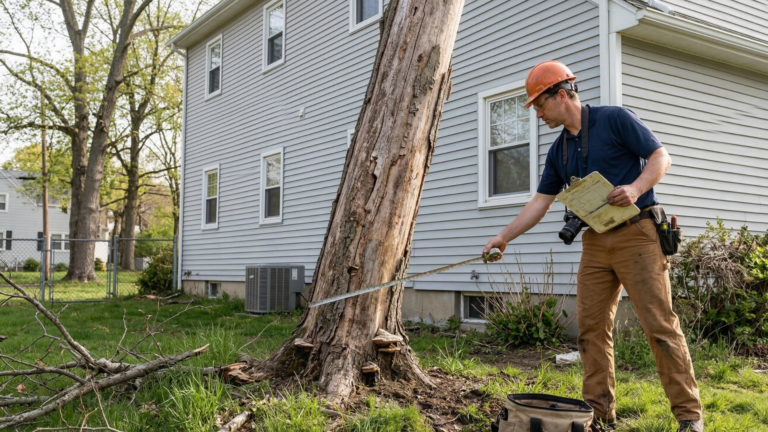
The process begins with site evaluation, where licensed arborists map root systems using probes or ground-penetrating radar to identify major structural roots versus surface feeder roots causing driveway damage. This assessment determines whether simple surface grinding will suffice or whether deeper tunneling techniques become necessary around foundation walls or utility lines. Zoning verification follows, confirming whether your property falls under tree warden jurisdiction for public right-of-way impacts or requires municipal permits for trees exceeding specific diameter thresholds on lots over one acre.
Regional clay soils throughout Connecticut and much of New York necessitate careful planning around soil compaction and settling timelines that differ from sandier regions where voids collapse quickly. Arborists adapt removal strategies based on access constraints near structures, choosing compact grinding equipment for tight spaces or hand excavation methods where heavy machinery would damage lawns. The combination of regulatory compliance checks and site-specific planning typically requires four to six hours before physical removal work begins, setting the foundation for yard damage prevention throughout the actual grinding and restoration phases.
Local Root Environment and Process Needs
Clay-heavy soils characteristic of the Northeast require initial surveys that assess drainage patterns and soil compaction levels before grinding begins, helping arborists predict settling behavior and plan appropriate backfill mixtures. Dripline protections under Connecticut forestry guidelines limit how close equipment can operate to remaining trees, often requiring hand tools or air spading in Protected Root Zones even when removing invasive species roots. Zoning verification becomes especially important on wooded lots where historic preservation districts or wetland buffers impose additional restrictions on root disturbance near water features or designated conservation areas.
Access considerations shape equipment selection, as narrow gates or established landscape beds prevent large grinders from reaching work areas without creating secondary damage paths across lawns. Arborists evaluate whether existing driveways provide sufficient clearance for equipment or whether temporary plywood pathways become necessary to distribute weight and prevent rutting in softer turf areas. Underground utilities require location before any grinding work, with Connecticut’s Call Before You Dig service providing free utility marking within two business days to prevent accidental strikes on gas, electric, or water lines running near root zones.
National vs. CT/NY Removal Timelines
Baseline timelines for tree root removal extend somewhat in Northeast states compared to national averages, primarily due to soil settling characteristics, tree warden review processes, and stricter regulations governing residential root work near protected zones. Standard surface root grinding across most U.S. regions completes within one to two days, but Connecticut and New York properties average two to three days when including mandatory assessments and recovery preparation steps required under state forestry programs.
The additional time reflects several regional factors that don’t apply uniformly nationwide. Tree warden coordination adds administrative review periods, though actual approval for hazardous roots damaging infrastructure typically processes within one business day once applications reach municipal offices. Soil settling timelines in clay-rich Northeast conditions extend over six to twelve months for complete stabilization, necessitating more thorough initial backfill and mulching work that prevents erosion while grass reestablishes.
Weather windows also compress work schedules, as Connecticut and New York arborists avoid root removal during spring thaw when saturated clay soils compact severely under equipment weight, causing rutting that persists through growing seasons. Dry conditions from late spring through early fall provide optimal timing, though autumn leaf drop sometimes delays work when municipalities enforce restrictions on heavy equipment use in residential zones during peak tourism or community events.
Typical Timeline Ranges by Root Scope
Simple surface root removal targeting visible roots lifting sidewalks or driveways averages one day nationally, with straightforward grinding converting roots into chips and minimal backfill required over the shallow voids. Connecticut and New York properties handling similar scope typically allocate two days, incorporating the assessment phase and more extensive mulching to address clay soil requirements for erosion prevention during the initial recovery weeks.
Complex root networks extending beneath foundations or wrapping around utility lines push timelines to two or three days nationally, reflecting the precision work required for selective root pruning and tunneling under structures. Northeast removals addressing comparable complexity often reach three days or slightly longer, as warden notifications and zoning reviews add coordination steps before physical work begins, particularly on larger parcels where tree preservation ordinances apply to specimens exceeding certain diameter measurements.
Emergency removals responding to storm damage or sudden infrastructure hazards sometimes compress timelines when municipalities expedite warden approvals, though Northeast properties still typically require minimum one-day assessment periods before grinding equipment deploys to ensure compliance with utility clearances and neighbor notification requirements.
Day-by-Day Breakdown Models
Day one focuses on assessment and preparation, consuming four to six hours as arborists survey root systems, mark Protected Root Zones around remaining trees, verify utility locations, and confirm zoning compliance or warden approvals. Crews establish equipment access paths using plywood or geotextile fabric to protect turf from compaction, fence off work zones for safety, and stage grinding or spading equipment near target areas. Homeowners receive final walkthroughs reviewing the planned grinding depths, expected chip volumes, and any temporary disruptions to walkways or driveway access during active work.
Day two centers on actual root extraction, with grinding or air spading consuming most of the workday depending on root density and soil conditions. Stump grinders typically reach six to twelve inches below grade, pulverizing major roots into mulch that fills voids as work progresses and eliminates the need for separate backfill hauling. Air spading operations take longer per linear foot but preserve soil structure around utilities and nearby landscape plants, making them preferable for precision work despite extended timelines. Barrier installations when preventing regrowth without full removal wrap up by day’s end, with vertical panels positioned and backfilled to redirect future root growth away from structures.
Day three addresses restoration, filling any remaining voids with topsoil or compost mixtures, spreading mulch over disturbed areas, and reseeding turf in coordination with local growing seasons. Crews rake debris, haul excess chips unless homeowners request retention for garden mulch, and conduct final grade checks ensuring proper drainage away from foundations. More extensive networks involving deep tunneling or wetland erosion controls may extend restoration into a fourth day, particularly when soil amendments and aeration become necessary to counteract clay compaction from equipment passes.
Key Steps in the Tree Root Removal Process
Core phases in professional tree root removal ensure yard integrity whether addressing stump remnants, driveway-lifting roots, or invasive species spreading into foundation zones, with each step tying into regional guidelines that protect both properties and remaining trees. The systematic approach minimizes guesswork and prevents common homeowner mistakes like over-excavation or inadequate backfill that lead to settling depressions and prolonged turf recovery.
Site preparation establishes the foundation for all subsequent work, preventing utility strikes and ensuring compliance with local ordinances before equipment ever touches soil. Actual root extraction employs techniques matched to specific situations, balancing removal effectiveness against yard damage prevention through tool selection and grinding depths. Restoration work immediately following root removal stabilizes soil, controls erosion, and jumpstarts grass regrowth, shortening the recovery timeline from months to weeks on most residential properties.
Site Preparation and Assessment
Arborist evaluations scan properties for hazards including underground utilities, irrigation lines, and shallow septic systems that could suffer damage during grinding operations or require hand excavation workarounds. Tree warden notifications proceed when root work impacts public rights-of-way or when removing trees potentially affects neighborhood aesthetics or environmental resources protected under municipal ordinances. Crews mark Protected Root Zone driplines with flags or spray paint, establishing safe operating distances that preserve remaining trees while accessing target roots.
Spite law verification becomes especially important on boundary properties, as Connecticut encroachment statutes prohibit root damage to neighbors’ trees without documented consent or clear evidence that roots pose genuine infrastructure hazards. Arborists photograph existing conditions, measure setbacks from property lines, and sometimes recommend joint consultations with adjacent landowners before proceeding with removals that could affect shared trees or root systems crossing boundaries.
Zoning setback confirmations prevent violations on larger parcels where tree preservation ordinances restrict removal within certain distances of wetlands, historic structures, or conservation easements. Some Connecticut towns require arborist reports documenting tree health and removal justification before issuing permits for specimens exceeding twelve inches diameter at breast height, adding several days to preparation timelines when variance applications become necessary.
Root Grinding and Selective Removal
Grinding equipment cuts roots six to twelve inches deep, pulverizing wood into mulch chips that fill voids immediately and eliminate the need for hauling backfill materials from off-site sources. The process avoids creating large excavation holes that settle unevenly in clay soils, instead producing a level grade ready for topsoil and reseeding within hours of completion. Precision cutting services operate grinders in systematic passes, working from outer edges toward central root masses and feathering depths to blend smoothly with surrounding grade.
Air spading provides precision around utilities and sensitive landscape plants, using compressed air to loosen soil particles while leaving roots, pipes, and cables intact for visual inspection before any cutting occurs. Arborists hand-prune roots once exposed, making clean cuts that heal faster than torn or crushed tissue from mechanical excavation. The technique particularly benefits situations where structural roots support nearby trees that must remain healthy, allowing selective removal of problem roots without compromising the stability of specimens designated for retention.
Root barrier installations position vertical panels eighteen to thirty-six inches deep, creating underground walls that redirect future growth away from foundations, driveways, or septic systems. Barrier specifications call for high-density polyethylene materials resistant to decay and root penetration, installed in trenches backfilled with native soil to maintain natural drainage patterns. Barriers prevent regrowth without requiring root extraction, offering a less invasive alternative when trees remain valuable for shade, property value, or local tree preservation ordinances.
Backfill, Mulch, and Initial Restore
Void filling proceeds immediately after grinding, combining wood chips generated during removal with topsoil or compost to create stable backfill that resists settling while providing organic matter for grass establishment. Arborists grade surfaces to match surrounding terrain, eliminating depressions that collect water and cause mud patches during spring rains or irrigation cycles. Mulch layers two to three inches thick cover disturbed areas, conserving soil moisture and moderating temperature fluctuations that could stress new grass seedlings.
Reseeding follows within twenty-four hours when weather permits, incorporating grass varieties matched to Connecticut and New York climate zones and existing lawn species for uniform appearance. Erosion control blankets or straw mulch protect seed on slopes exceeding ten percent grade, preventing washouts during thunderstorms common throughout Northeast growing seasons. Connecticut forestry guidelines recommend native grass mixes that establish quickly while providing habitat value, though most residential applications prioritize turfgrass varieties matching homeowner preferences.
Initial watering instructions emphasize deep, infrequent irrigation that encourages root development rather than frequent shallow watering that keeps surfaces soggy and delays soil settling. Arborists mark restored areas with temporary fencing or caution tape, protecting new seed from foot traffic and pet activity during the critical two-week germination window when disturbance could require reseeding.
Additional Steps for Complex Removals
Full-service root removal jobs adapt to Northeast challenges including deep structural roots, wetland proximity regulations, and boundary situations where spite laws require neighbor coordination, typically adding one day to baseline timelines. Complex scenarios demand specialized equipment or hand techniques that progress more slowly than straightforward surface grinding, though the extra care prevents yard damage and legal complications that could extend disruption far beyond the active work period.
Deep root systems supporting large trees or extending beneath structures need tunneling approaches that preserve soil overhead while accessing roots without excavating entire areas down to removal depth. Wetland buffer zones trigger erosion control requirements including silt fencing, sediment traps, and sometimes restoration plantings that offset tree removal impacts under state environmental regulations. Boundary root removals benefit from documented neighbor consent and sometimes shared costs when roots clearly originate from properties on both sides of lot lines.
Handling Deep Roots, Wetlands, and Neighbors
Tunneling beneath driveways or foundation footings accesses structural roots without disturbing surface infrastructure, using specialized boring equipment or hand excavation that progresses a few feet per hour depending on soil density and root diameter. Arborists shore tunnel walls with temporary supports, preventing collapse that could undermine pavement or create voids beneath concrete slabs. The technique typically adds one full day compared to surface grinding, though it eliminates repaving costs and preserves landscaping features that would otherwise require removal for equipment access.
Wetland buffer work requires silt fencing installation downslope from grinding areas, catching sediment before it washes into streams or ponds during rain events that could trigger enforcement actions from state environmental agencies. Some Connecticut towns require wetland permits for root work within fifty to one hundred feet of water features, adding two weeks to planning timelines though actual installation work rarely exceeds a few hours. Restoration plantings sometimes accompany removals when compensatory mitigation becomes necessary to offset impacts on riparian buffers or protected habitat zones.
Boundary root removals proceed cautiously after arborists document which property contains the tree trunk and whether roots crossing lot lines pose genuine damage risks versus simply existing beneath unused lawn areas. Spite laws prohibit malicious root cutting intended to harm neighbors’ trees, so careful documentation including photographs, arborist reports, and sometimes certified letters notifying adjacent owners helps establish that removals address legitimate infrastructure protection rather than property disputes. Shared cost arrangements sometimes resolve situations where roots from one property damage another’s driveway, with both owners contributing to grinding expenses and benefiting from restored pavement.
Finishing Touches and Yard Restoration
Clay soil aeration following grinding breaks up compaction from equipment traffic, using core aerators that pull soil plugs and allow oxygen, water, and nutrients to reach grass roots more effectively. Compost amendments mixed into backfill provide organic matter that improves clay drainage and nutrient retention, accelerating turf establishment compared to filling voids with pure wood chips or mineral soil. Arborists conduct final walkthroughs with homeowners, identifying any settling spots that may develop over subsequent weeks and explaining maintenance practices that support recovery.
Debris hauling removes excess wood chips, though many homeowners retain chips for garden mulch around ornamental beds or woodland path surfaces. Standard services include raking work areas to remove sawdust and small debris, sweeping paved surfaces clean of tracking, and touching up any incidental damage to lawn edges or landscape beds from equipment positioning. Settling monitoring instructions guide homeowners through the two to four week period when minor depressions may appear as backfill consolidates, with arborists often returning for complimentary topdressing if settling exceeds normal ranges.
Recovery timelines emphasize patience with clay soil conditions, as full stabilization requires six to twelve months though grass coverage typically fills in within four to six weeks during active growing seasons. Homeowners receive care instructions covering watering frequency, mowing height restrictions during seedling establishment, and timing for overseeding any thin patches that develop through the first season after removal work completes.
Permits, Assessments, and Regulations in CT and NY
Pre-site legal steps ensure root removal projects comply with municipal tree ordinances, state forestry regulations, and property line statutes that protect both homeowner interests and community environmental resources. Connecticut and New York operate decentralized systems where each town maintains unique tree protection rules layered atop state-level guidelines, requiring arborists to research specific requirements based on property location before commencing any root work.
Tree warden systems in Connecticut empower municipal officials to regulate removal of trees affecting public safety, scenic resources, or right-of-way areas, with warden approval required before cutting roots that could destabilize trees visible from roads or impacting public utilities. New York municipalities exercise similar authority through varying title positions including tree boards, conservation commissions, or designated enforcement officers who review removal applications against local preservation ordinances.
Zoning permit requirements activate on larger parcels, often at one-acre thresholds where residential properties transition into categories subject to environmental review for tree removal impacts on stormwater management, wildlife habitat, or neighborhood character. Some historic districts impose additional scrutiny regardless of lot size, requiring design review board approval before removing mature trees that contribute to protected viewsheds or streetscape aesthetics.
Zoning and Warden Coordination
Local tree wardens process hazard removal requests quickly when roots demonstrably damage infrastructure, with standard municipal procedures typically reviewing applications within one to three business days for straightforward cases involving sidewalk lifting or driveway cracking. Filings through town websites or in-person at municipal offices require photographs documenting damage, property surveys showing tree locations, and sometimes arborist letters confirming that root removal represents the most appropriate remedy versus alternative repairs or barrier installations.
Zoning permits for lots exceeding one acre or in designated overlay districts follow lengthier review timelines, often requiring public notice periods and planning board hearings before approval, particularly when removing multiple trees or specimens exceeding certain diameter thresholds. Some Connecticut towns consider trees over twelve inches diameter as protected resources requiring variance applications that can extend timelines by several weeks, though genuine hazards often qualify for expedited emergency removal processes.
Spite law considerations add documentation requirements when boundary roots cross property lines, as encroachment statutes prohibit actions damaging neighbors’ trees without demonstrating that roots pose genuine threats to structures, utilities, or hardscaping rather than merely existing beneath lawns. Arborists recommend certified letters notifying adjacent property owners before cutting roots originating from their trees, establishing good-faith communication that helps prevent legal disputes even when technical rights to trim encroaching roots exist under common law doctrines.
What Homeowners Should Prepare For and Do
Supporting smooth execution through root removal phases requires homeowners to maintain availability for access coordination, approve final work plans, and monitor initial recovery periods when prompt action on settling issues prevents minor depressions from becoming permanent yard damage. Active involvement during assessment and approval stages helps identify potential complications early, while understanding daily expectations reduces anxiety about temporary disruptions to normal property use.
Preparation extends beyond simply clearing work areas, encompassing legal verifications, utility markings, and sometimes neighbor notifications that create paper trails protecting against future disputes or unexpected delays when crews arrive ready to begin grinding operations. Most professional services handle permit applications and warden coordination, but homeowners benefit from understanding timelines and requirements that could affect scheduling, particularly during peak spring and fall seasons when arborist calendars fill months in advance.
Daily Expectations During Removal
Active grinding or spading generates wood chips and soil dust concentrated within work zones but potentially drifting onto adjacent lawn areas or landscape beds, requiring temporary covering of sensitive plants or outdoor furniture near removal sites. Day one and two noise levels from grinding equipment reach eighty-five to ninety-five decibels within immediate work areas, comparable to lawnmowers but sustained over multiple hours as arborists methodically process root systems. Access restrictions typically limit use of driveways or walkways where grinding occurs, with crews establishing alternative paths or scheduling work to minimize interference with homeowner comings and goings.
Availability for zone approvals becomes important when arborists encounter unexpected root configurations or utility conflicts requiring on-site decisions about grinding depths or technique adjustments. Final grade checks before crew departure ensure homeowner satisfaction with restoration work and identify any areas where additional mulch or seed might improve appearance or drainage. Most services request final walkthroughs while equipment remains on-site, allowing immediate correction of any concerns rather than requiring return visits.
Tips to Minimize Disruptions
Pre-marking underground utilities including sprinkler lines, invisible dog fences, and landscape lighting circuits prevents damage that could extend timelines and create additional repair costs beyond root removal itself. Connecticut’s Call Before You Dig service marks public utilities within two business days, but homeowners remain responsible for locating private lines that fall outside utility company jurisdiction. Arborists appreciate advance notification of hidden irrigation systems or buried downspout extensions that may not appear on property surveys.
Pet and plant protection during active work includes temporarily relocating sensitive container plants from work zones, securing pets indoors or away from equipment areas, and removing lawn furniture or decorative features that could interfere with grinding access. Dry weather scheduling beats clay soil complications, as saturated conditions from recent rains increase equipment rutting risks and complicate grading work that requires stable surfaces for accurate final leveling.
Communication with neighbors about temporary noise, equipment parking in street areas, or brief utility interruptions if service lines cross properties maintains good relationships and sometimes identifies shared concerns about boundary roots worth addressing cooperatively. Advance notice also allows neighbors to schedule their own activities around work periods, reducing frustration about unexpected disruptions on days when they planned outdoor events or remote work requiring quiet.
Process Comparison Table: Simple vs. Complex Root Removal in CT/NY
| Phase | Simple Removal (Surface Roots) | Complex Removal (Deep/Network) |
|---|---|---|
| Prep & Assess | 4-6 hours for utility verification and zone marking | 1 day including warden coordination and boundary documentation |
| Grinding/Spading | 1 day surface grinding to 6-12 inches depth | 1-2 days for tunneling beneath structures or precision spading near utilities |
| Backfill/Restore | Half day for chip spreading and reseeding | 1 day including soil amendment and erosion control installation |
| Total Timeline | 1-2 days from start to final cleanup | 2-3+ days with permits and complex soil conditions |
Common Mistakes Homeowners Make During Root Removal
DIY attempts at root extraction frequently create yard damage exceeding the original problem, as homeowners excavate large craters trying to expose entire root systems that professional grinding could have addressed with minimal surface disturbance. Over-digging destabilizes surrounding trees by severing structural roots beyond the intended removal area, sometimes causing delayed tree failure months or years later when weakened root systems can no longer support crown weight during storms. Clay soil settling in hand-dug holes proceeds unevenly without proper backfill compaction, leaving depressions that collect water and kill grass while requiring multiple rounds of topdressing to restore grade.
Ignoring spite law risks invites neighbor disputes and potential legal liability when root cutting damages trees on adjacent properties without documented consent or clear evidence of infrastructure threats justifying the work. Connecticut property line statutes allow homeowners to trim encroaching roots at boundaries but prohibit actions intentionally harming neighbors’ trees, a distinction that becomes contentious when root removal kills or destabilizes specimens clearly growing from adjoining lots.
Skipping tree warden notifications on properties where public right-of-way trees overhang private land exposes homeowners to municipal enforcement actions including stop-work orders, fines, and mandatory restoration requirements that can multiply project costs. Hazardous root removal affecting sidewalks or street trees typically requires warden approval even when roots extend onto private property, as municipalities retain authority over tree impacts visible from public areas or affecting community infrastructure.
Poor backfill practices including using pure clay soil or failing to incorporate organic matter lead to slow settling that extends yard recovery timelines from weeks to months as voids consolidate unevenly beneath surfaces. Inadequate mulching exposes bare soil to erosion, washing seed and topsoil into storm drains during thunderstorms and creating ruts that persist through growing seasons. Reseeding at wrong times, particularly late fall plantings that germinate weakly before winter dormancy, wastes effort and requires spring reseeding to achieve acceptable turf density.
Preparing Your Property for Tree Root Removal in CT/NY
Early arborist consultations, ideally several weeks before desired work dates, allow time for assessments, permit applications, and scheduling during optimal weather windows when dry soil conditions minimize equipment rutting and speed recovery. Arborists evaluate whether root grinding, selective pruning, or barrier installation best addresses specific situations, providing estimates that account for regional soil conditions and regulatory requirements unique to Connecticut and New York properties. Spring and fall scheduling typically requires booking months in advance as demand peaks during moderate weather periods when both arborists and grass seed perform optimally.
Trimming overgrowth around work areas improves equipment access and reduces incidental damage to shrubs or perennial beds adjacent to target roots, though professional services typically include minor pruning as part of site preparation. Homeowners benefit from clearing stored items, lawn furniture, or decorative features from zones within ten feet of grinding locations, preventing accidental damage and eliminating obstacles that could slow work progress or require crew time repositioning materials.
Boundary surveys confirming property lines and Protected Root Zone driplines establish clear limits before crews begin work, preventing accidental encroachment onto neighbors’ property or excessive root cutting that violates Connecticut forestry standards for tree protection during adjacent land development. Surveys also identify easements or right-of-way zones where municipal authority supersedes private property rights, triggering tree warden coordination requirements even when work occurs entirely within lot boundaries.
Documentation including photographs of existing conditions, measurements of driveway cracks or sidewalk lifting, and notes about previous root control attempts helps arborists develop appropriate work plans and sometimes supports permit applications or insurance claims when root damage affects insured structures. Homeowners should retain copies of all permits, warden approvals, and neighbor notifications throughout the project, as these records prove valuable if questions arise during final inspections or in unlikely event of subsequent disputes about work scope or property impacts.
Frequently Asked Questions About Tree Root Removal Process Near Me in CT
Q: What is the typical tree root removal process?
A: The standard sequence includes assessment and preparation where arborists survey root systems and verify permits, grinding or selective extraction using equipment matched to site conditions, and backfill with restoration including mulching and reseeding to stabilize soil. Residential projects typically complete within one to three days depending on root extent and soil conditions, with most work concentrated in the actual grinding phase after preparation concludes.
Q: How long does yard recovery take after root removal?
A: Grass reseeding shows visible growth within two to four weeks during active growing seasons, though full soil settling requires six to twelve months in clay-heavy Northeast conditions as backfill consolidates and organic matter decomposes. Most homeowners resume normal yard use including mowing within three to four weeks, with any minor settling depressions addressed through topdressing applications as they develop over the first season.
Q: Are permits required for tree root removal in my area?
A: Connecticut and New York requirements vary by municipality, with tree warden approval common for hazardous roots affecting public infrastructure or right-of-way trees and zoning permits often required on larger parcels exceeding one acre. Specific thresholds differ by town, so verification through municipal offices or with licensed arborists familiar with local regulations ensures compliance before work begins. Emergency removals sometimes qualify for expedited processing when roots create immediate safety hazards.
Q: What should I expect on removal day one?
A: Initial site visits focus on final surveys, utility verification, and zone marking rather than heavy equipment operation, consuming four to six hours as arborists confirm work plans and establish equipment access paths. Homeowners should remain available for any clarification questions and final approval of grinding depths or restoration approaches before crews commit to irreversible root cutting. Noise levels remain minimal during assessment phases, with disruptive grinding typically beginning on day two after all preparations conclude.
Q: How can I prepare my yard for root removal?
A: Clear work areas within ten feet of target roots by removing lawn furniture, decorative features, and trimming low shrub branches that could interfere with equipment positioning. Mark underground irrigation lines, invisible pet fences, or buried utilities not covered by public locating services, and secure pets indoors during active work periods. Homeowners should also verify that equipment can access work zones through gates or along driveways without requiring removal of fencing or permanent landscape features.
Final Thoughts
Connecticut and New York professionals handle tree root removal projects with predictable efficiency, working within local zoning requirements, spite law protections, and clay soil challenges to complete most residential jobs in one to three days with rapid yard recovery timelines. Understanding the process phases from initial assessment through grinding and restoration helps homeowners prepare realistically for brief disruptions rather than the months-long yard destruction many fear when first confronting invasive root problems. Regional regulations actually support minimal impact approaches by requiring arborist assessments, tree warden coordination, and careful attention to Protected Root Zones that prevent unnecessary digging beyond what’s needed to address specific infrastructure threats.
The investment in professional root removal services pays dividends through preserved landscaping, avoided settling issues, and turf that reestablishes within weeks rather than requiring extensive regrading or replanting over prolonged periods. Targeted grinding, selective air spading, and proper backfill techniques restore yards to functional condition faster than attempting DIY excavation, while compliance with permits and neighbor notification requirements prevents legal complications that could prove far costlier than the original root damage. Homeowners gain peace of mind knowing their properties meet state forestry standards and local tree ordinances while eliminating hazards that threatened driveways, foundations, or hardscaping features.
When tree roots threaten your Connecticut or New York property and you want the job handled right the first time without turning your yard into a construction zone for months, Hennessey Tree & Landscape CT brings the expertise to execute targeted removals with minimal disruption. While root grinding and extraction form just one element of comprehensive property care, our team understands how these services connect to broader landscape health through proper arborist assessment, regulatory compliance, and soil restoration techniques that work specifically with Northeast conditions. Based in Connecticut and serving surrounding areas, we combine licensed arboricultural knowledge with practical experience navigating local tree warden systems and zoning requirements that protect both your property investment and community environmental resources. Contact Hennessey Tree & Landscape CT today for a consultation that addresses your specific root concerns and develops a compliant removal plan that returns your yard to normal use within days rather than disrupting your property for extended periods.