How to Get Affordable Tree Removal Without Sacrificing Safety
When a homeowner hears chain saws starting up in the yard, the first worry is often how much the property will suffer during the process. Affordable tree removal doesn’t have to mean corner-cutting crews that leave your lawn torn up for weeks or create safety risks that could cost you far more later. In Connecticut and New York, professional arborists work within strict regulations set by tree wardens and local zoning boards, which actually helps keep the process predictable and prices reasonable. The reality is that most residential tree jobs, even large ones, wrap up in just one or two days with minimal yard disruption when handled by licensed professionals. You can save money by timing your project right, bundling services like stump grinding, and choosing certified arborists who know how to work efficiently within regional safety protocols. The key is understanding what the process involves, from permit requirements to cleanup timelines, so you’re not caught off guard by hidden costs or unnecessary delays. For Northeast homeowners dealing with storm-damaged trees or overcrowded properties, getting safe and affordable service means knowing what questions to ask and what red flags to watch for when hiring.
Key Takeaways
- Residential Tree Jobs Typically Take Hours to Two Days: Small accessible trees often finish in 2-4 hours, while large hazardous removals requiring permits may take 1-2 days plus a 10-day preparation period for municipal approvals.
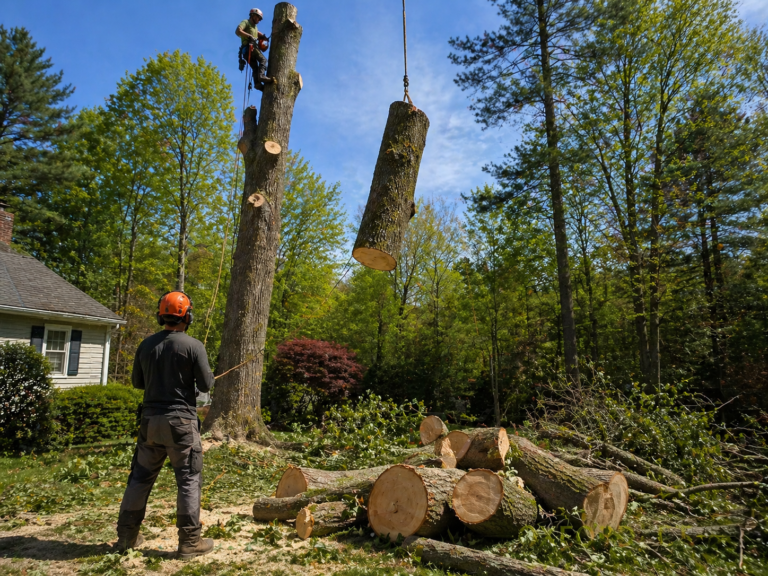
- Sectional Dismantling Methods Protect Your Property: Professional crews use top-down limb removal with rigging systems and ropes to control each piece, limiting ground impact compared to simply felling an entire tree.
- Pre-Work Planning Prevents Costly Surprises: Connecticut tree warden checks, utility clearances, and zoning reviews identify potential hazards or neighbor issues early in the process.
- Standard Services Include Stump Grinding and Same-Day Cleanup: Below-grade stump removal and debris hauling on the same day prevent rot issues and neighbor complaints while keeping your project on schedule.
- Permit Requirements Vary Between Connecticut and New York: Tree warden approval is common for public-risk trees with 10-day neighbor notices, while many private healthy trees under local codes don’t require permits.
- Winter Scheduling Delivers the Best Savings: Off-season quotes run 20-30% lower than peak summer rates, and bundling stump removal with the main job cuts overall costs significantly.
Understanding the Tree Removal Process in CT and NY
Professional tree removal in the Northeast follows a carefully sequenced approach that addresses the unique challenges of storm-prone properties, close neighbor setbacks, and strict legal frameworks. Connecticut and New York homeowners benefit from regulations that prioritize public safety under Connecticut General Statutes §23-59 through §23-65, which give tree wardens authority to manage removals that could affect public areas or utilities. These laws may seem bureaucratic at first, but they actually protect homeowners from liability issues and ensure that removal crews can’t take shortcuts that might damage your property or create hazards. The process adapts to accommodate utility lines that crisscross many yards, narrow access points common in older neighborhoods, and the property line buffer zones that prevent spite removals of healthy trees.
Licensed arborists in Connecticut and New York understand how to navigate local zoning requirements while keeping projects affordable through efficient planning. They conduct initial hazard assessments to determine whether a tree qualifies for removal under municipal codes, checking for disease, structural damage, or proximity issues that could threaten structures. Before any cutting begins, professionals verify property lines to avoid neighbor disputes and call 811 to mark underground utilities, which prevents expensive damage claims that could add thousands to your final bill. The regional approach emphasizes controlled sectional removal over simple felling, particularly in residential areas where space is limited and nearby homes or fences could be damaged by a falling trunk.
Local Tree Environment and Process Needs
The heavily wooded residential areas throughout Connecticut and New York create specific conditions that shape removal strategies and timelines. Storm-weakened trees are common after the heavy snow and ice events the region experiences, which means professionals routinely assess structural integrity before rigging any equipment. Many properties feature mature trees planted decades ago when lots were larger, and these now sit uncomfortably close to homes, septic systems, or driveways, requiring precision cutting techniques. Tree wardens prioritize removals based on public risk factors, so homeowners dealing with trees near roads or sidewalks may find permits processed faster than purely aesthetic removals.
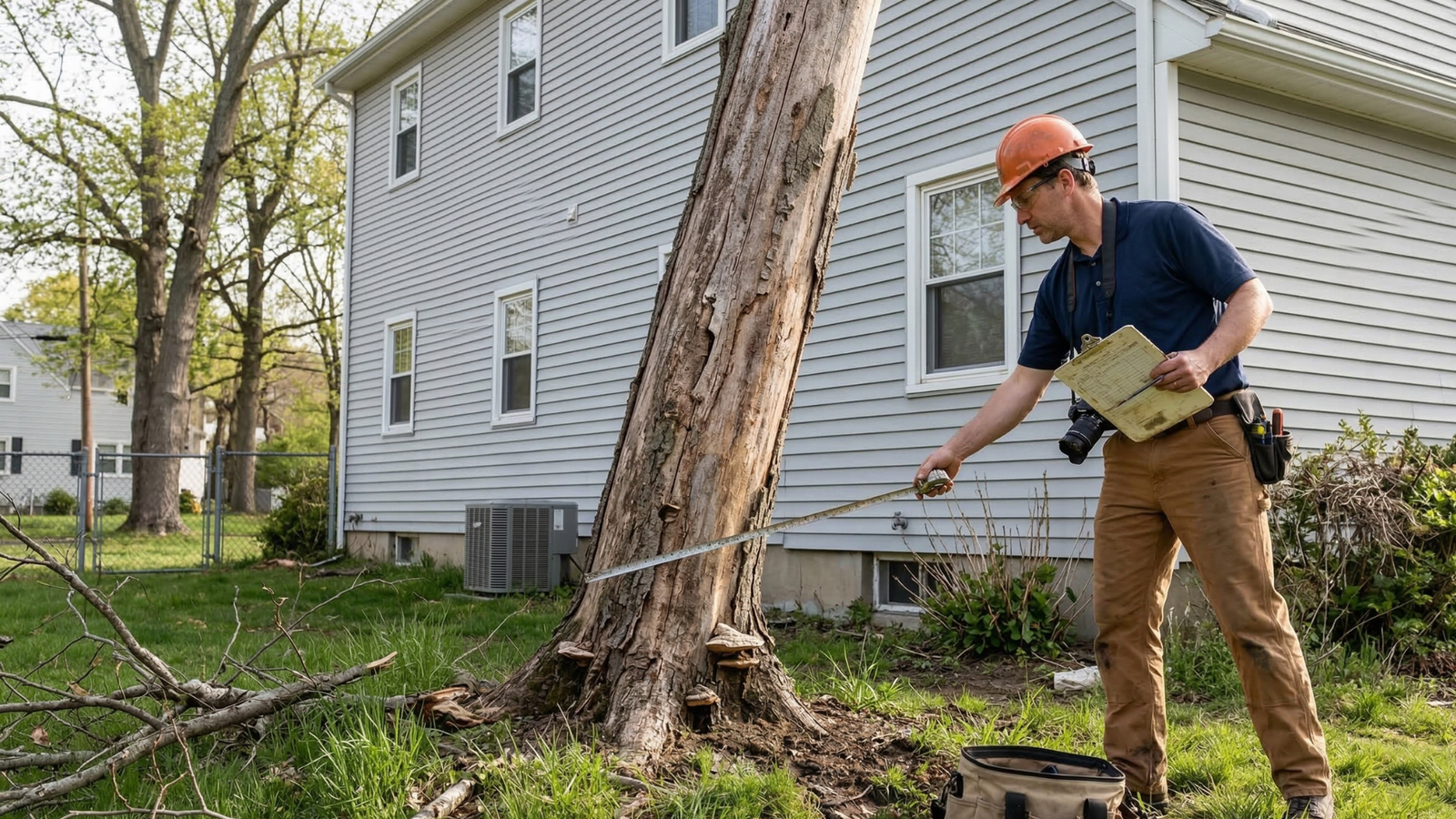
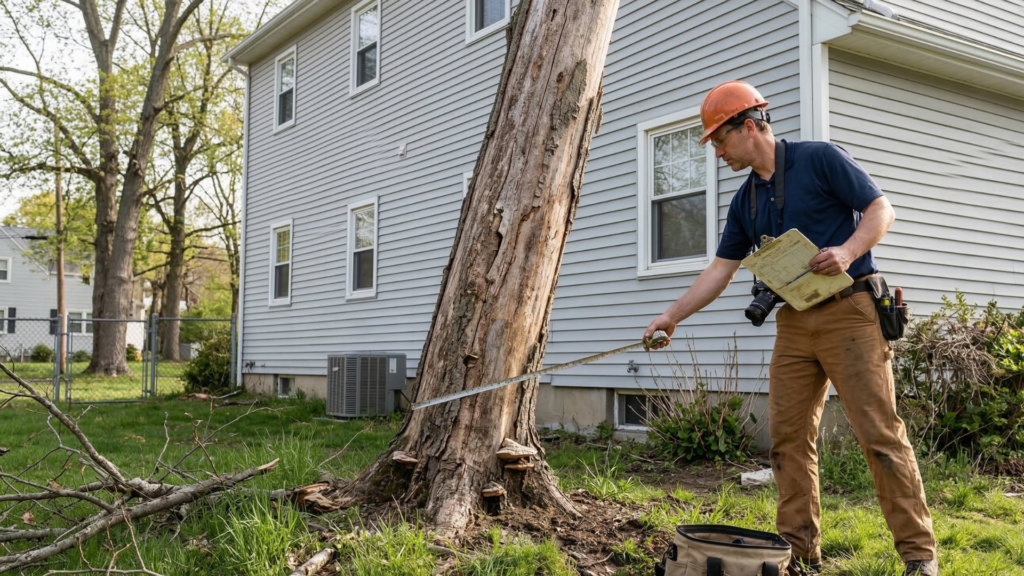
Initial assessments verify hazards such as dead branches, root heave from freeze-thaw cycles, or lean angles that indicate instability. Professionals measure trunk diameter at breast height to determine if municipal oversight applies, since many towns regulate trees over 6 inches that could affect neighboring properties. Property line buffer requirements mean that even healthy trees may need permits if their removal could impact a neighbor’s shade, privacy, or property value, which is why spite fence tree removal regulations exist to prevent malicious cuts. Understanding these local factors helps homeowners set realistic expectations for timelines and prevents the surprise delays that inflate cheap tree service quotes into expensive projects.
National vs. CT/NY Removal Timelines
Baseline tree removal timelines often cited in national guides don’t fully account for the additional steps required in the Northeast, where permit processes and sectional dismantling methods extend project durations but ensure safer outcomes. A small tree in a wide-open yard in a less-regulated state might come down in two hours, but Connecticut and New York projects typically add time for municipal coordination and methodical cutting techniques. The tradeoff is worth it, homeowners pay slightly more in time but far less in property damage, liability claims, or code violation fines that can reach thousands of dollars.
Budget tree cutting services that promise rock-bottom prices and same-day completion often skip the permitting step entirely, which exposes homeowners to fines and forces them to pay for proper removal anyway. Licensed tree service CT professionals build permit wait times into their project schedules, ensuring that the 10-day posting period required for many removals doesn’t surprise you. The extended timeline actually works in your favor when you need time to coordinate with neighbors about shared tree issues or to arrange for landscaping restoration after stump removal.
Typical Timeline Ranges by Tree Size
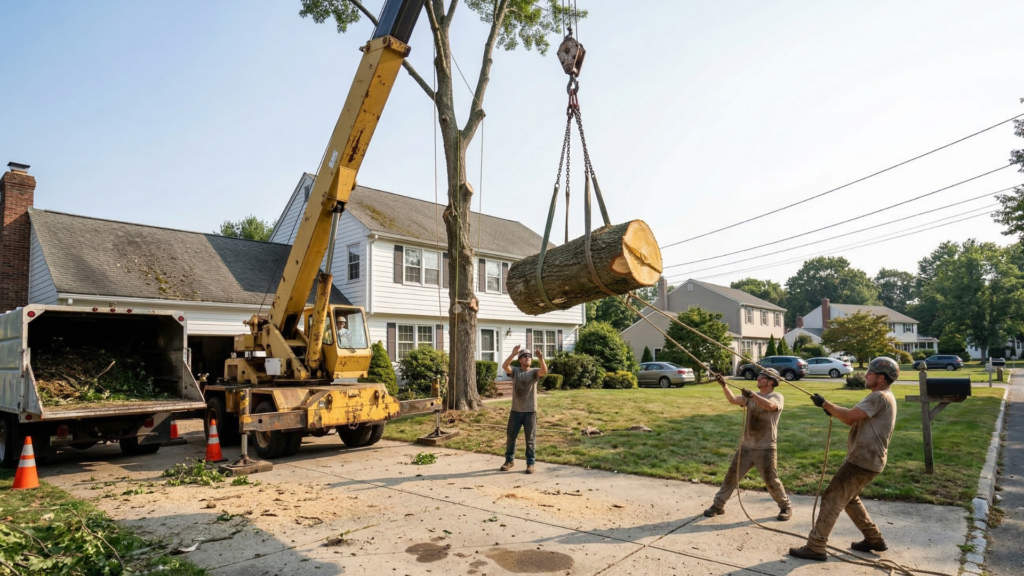
Small trees under 30 feet in accessible locations with no overhead hazards generally require 2-4 hours for complete removal including cleanup, which aligns with national averages but assumes proper planning. Medium trees between 30 and 60 feet situated near structures or with utility line complications typically take a full day in Connecticut and New York, longer than the 4-6 hours often quoted nationally. Large or hazardous trees over 60 feet commonly require 1-2 days of active work plus the 10-day permit notice period, which professionals factor into scheduling to set accurate expectations.
The difference between a four-hour job and a two-day project often comes down to access limitations and safety requirements rather than tree size alone. A 40-foot oak in a backyard with no fence access might take longer than a 60-foot maple beside a driveway where crane equipment can operate efficiently. Northeastern properties frequently feature sloped yards, stone walls, and underground utilities that require slower, more deliberate cutting methods, which is why hiring licensed professionals familiar with these conditions prevents the yard damage that comes from rushed work.
Day-by-Day Breakdown Models
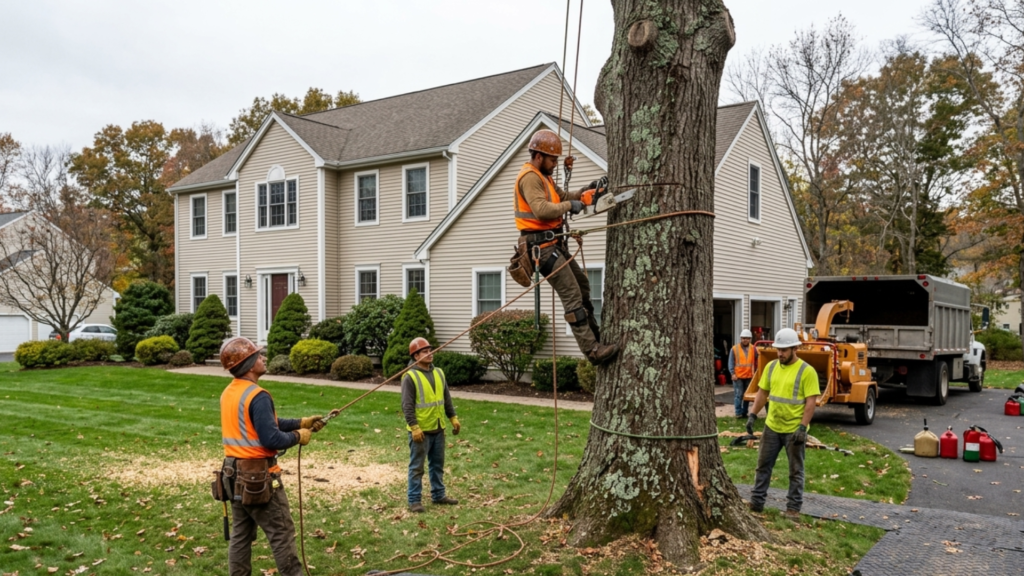
A typical single-day removal begins with a 1-2 hour assessment and setup phase where crews lay protective tarps, mark drop zones, and verify utility locations with the homeowner present. The main cutting phase takes 4-6 hours for medium trees as professionals work from the top down, removing branches in controlled sections using rope systems that prevent large pieces from free-falling onto your lawn. Cleanup and chipping happen immediately after cutting, with most crews hauling debris off-site the same day to avoid fire hazards or pest attraction.
Complex jobs requiring cranes or utility coordination split into two days, with the first day focused on prep work and sectional removal of the crown, while day two handles trunk sectioning, stump grinding, and comprehensive yard restoration. Multi-tree projects on larger properties may extend to three days when phased to maintain property access, with daily cleanup clauses in contracts ensuring your yard isn’t left torn up overnight. Emergency tree removal affordable options exist for storm damage, where crews work extended hours to remove immediate hazards, though these rush jobs typically cost 50-75% more than standard scheduled service.
Key Steps in the Tree Removal Process
Professional tree removal follows core phases designed to protect both the crew and your property while meeting OSHA safety standards and regional building codes. Each step builds on the previous one, creating a systematic approach that experienced arborists can execute efficiently without cutting corners. Understanding these phases helps homeowners recognize when a low-cost arborist is taking dangerous shortcuts versus when they’re simply working efficiently through a well-established process.
The sequence remains consistent whether you’re removing a single hazardous tree or clearing multiple specimens for a landscaping project. What changes is the time allocated to each phase and the equipment required, which directly impacts your final cost. Affordable options maintain the same safety protocols but achieve savings through efficient scheduling, proper equipment selection, and streamlined cleanup processes that prevent double-handling of debris.
Site Preparation and Assessment
Professionals begin every job with a thorough hazard evaluation that examines tree lean, root stability, dead branches, and nearby obstacles that could complicate removal. They spread tarps or plywood sheets in high-traffic areas to protect grass and garden beds from equipment damage, which prevents the soil compaction and rut damage that can take months to repair. The 811 utility marking service must be called at least three days before digging to locate buried power, gas, and water lines, a step that seems minor but prevents catastrophic accidents and costly repairs.
Crews stake out drop zones and establish safety perimeters that keep family members and pets at safe distances during cutting operations. They verify local zoning requirements and setback distances to ensure the planned work won’t violate property line regulations that could trigger spite removal complaints from neighbors. This preparation phase typically takes 1-2 hours for straightforward jobs but can extend to half a day when dealing with complex sites involving multiple utilities or tight access points between buildings.
Limbing, Felling, and Dismantling
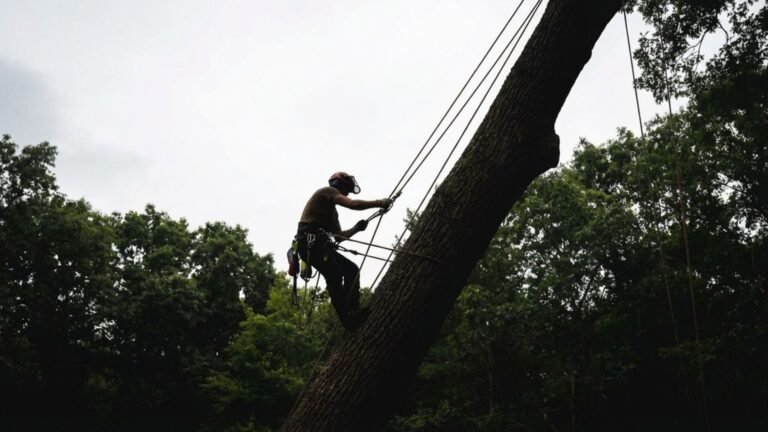
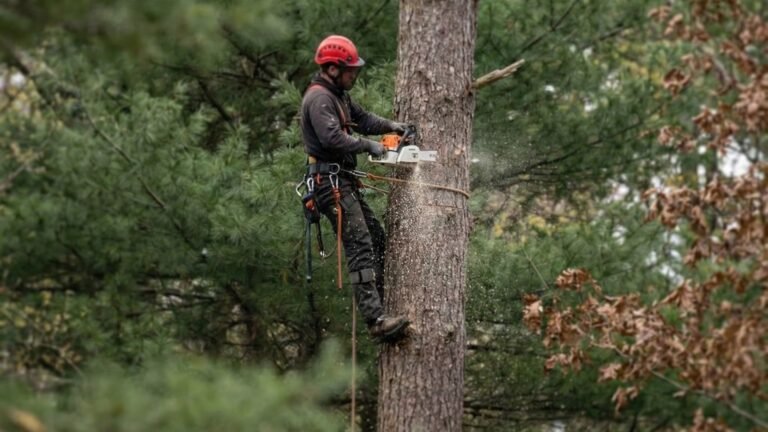
The actual tree cutting follows established safety protocols that prioritize controlled descents over speed. Tree limbing techniques start at the crown and work downward, with each major branch removed using the three-cut method that prevents bark stripping and maintains tree stability throughout the process. Sectional tree dismantling becomes essential when trees stand near homes, fences, or utilities, with pieces lowered by rope rather than dropped freely, which might save time but creates dangerous situations and property damage.
Crane tree removal equipment allows professionals to lift large trunk sections vertically away from structures, particularly useful for 60-foot or taller specimens where traditional rigging systems would require too many cuts and too much time. The trunk comes down in manageable 3-5 foot sections for hand-carrying, or larger pieces when crane capacity allows, with each piece immediately moved to a processing area away from the main work zone. This methodical approach prevents the “yard torn up” scenarios that happen when crews let large sections fall and then drag them across lawns, creating deep ruts that take expensive landscaping work to repair.
Stump Grinding and Debris Handling
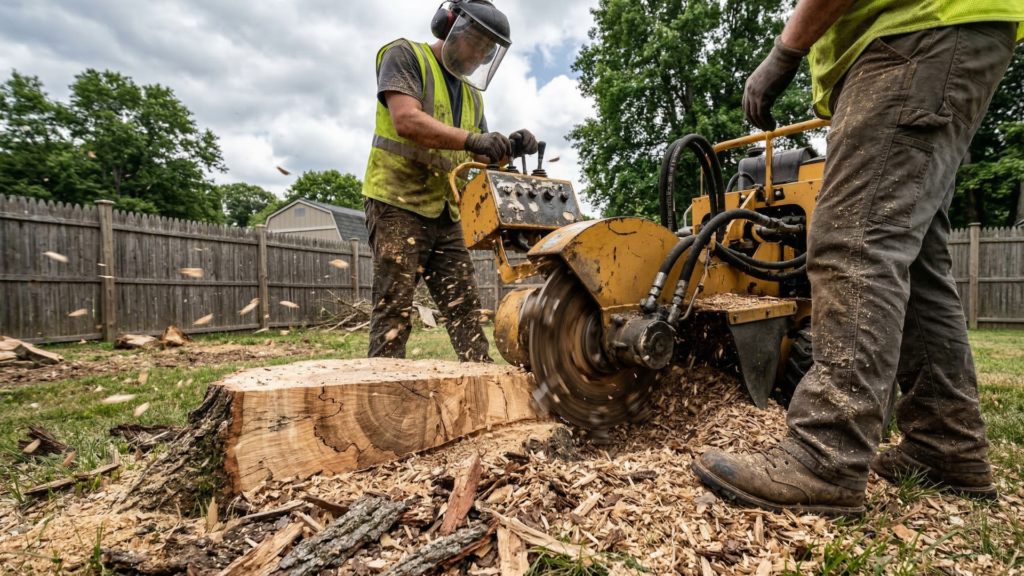
Stump removal regulations in most Connecticut and New York towns don’t mandate grinding, but leaving stumps creates tripping hazards, pest habitat, and rot issues that can spread to healthy nearby trees. Professional grinders reduce stumps to 6-12 inches below grade, which allows for immediate grass seeding or landscaping installation without waiting for years of natural decomposition. The wood chips produced during grinding can be spread as mulch around remaining trees or hauled away, depending on your preference and whether your contract includes chip disposal.
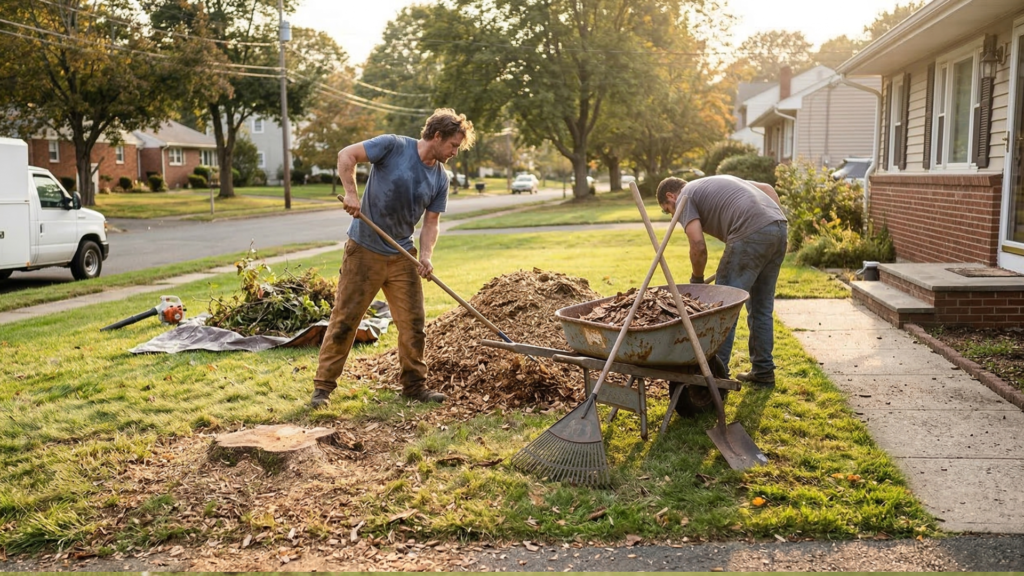
Tree debris cleanup happens concurrently with cutting operations as crews chip branches on-site using portable chippers that reduce volume by 90% or more. Same-day debris removal prevents the unsightly brush piles that can sit for weeks when homeowners hire budget services without confirmed haul-away timelines. Professionals rake and blow the work area to remove small debris, then seed any bare spots created by equipment traffic, which starts the restoration process immediately rather than leaving brown patches that become permanent bare spots.
Additional Steps for Complex Removals
Full-service tree jobs adapt standard procedures to handle the unique challenges that Northeast properties frequently present. Complex removals still follow the same core safety principles but incorporate specialized equipment and extended timelines to address factors like extreme height, storm damage, utility proximity, or multiple-tree projects. These additions typically add one extra day to the project timeline but prevent the property damage and safety incidents that would cost far more to resolve.
Homeowners dealing with tall specimens over 60 feet, trees with structural damage from storms, or properties with multiple trees requiring removal should expect quotes that reflect the additional labor and equipment needed. The cost difference between simple and complex jobs is substantial, but trying to force a complex tree into a simple removal timeline creates the dangerous situations that lead to injuries, property damage, and insurance claims.
Handling Hazardous, Multi-Tree, or Utility Jobs
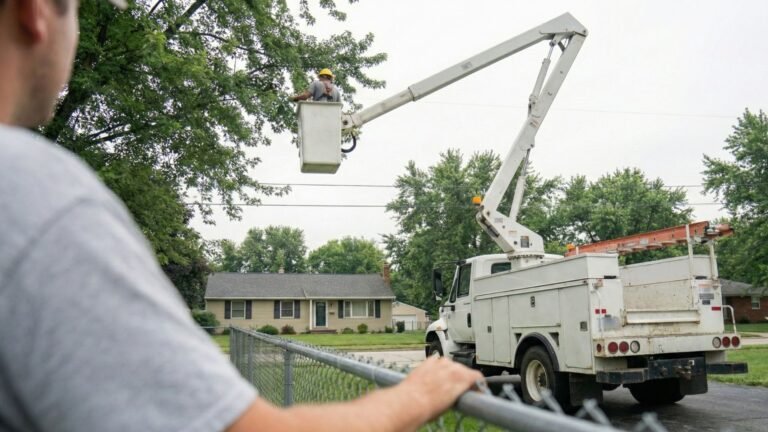
Storm-damaged trees with split trunks or hanging branches require special rigging to stabilize them before cutting begins, often adding 2-3 hours to the prep phase. Crane tree removal becomes necessary for trees over 60 feet or those with major lean toward structures, with crane rental adding $500-1,500 to project costs but completing work faster and safer than traditional climbing methods. Utility tree clearance requirements mandate 20-foot buffers from power lines, which means coordination with utility companies to temporarily de-energize lines or provide line guards during cutting.
Multi-tree removal projects save money through efficiency but require phased scheduling to maintain property access and prevent overwhelming your yard with debris. Crews tackle the most hazardous specimens first, then work through the remaining trees in logical sequence based on location and equipment positioning needs. Silt fence or erosion controls may be required for properties on slopes or near waterways, adding minor costs but preventing the municipal fines and environmental damage that come from sediment runoff during extended projects.
Emergency tree removal affordable services exist for situations where storms have created immediate hazards like trees leaning on homes or blocking driveways. These rush jobs bypass normal scheduling but command premium rates, typically 50-100% above standard pricing, because crews must mobilize equipment and personnel on short notice. The tradeoff is worthwhile when waiting could mean additional property damage or safety risks, but homeowners should verify that emergency rates are clearly disclosed before authorizing work.
Finishing Touches and Yard Restoration
Professional services conclude with comprehensive site cleanup that goes beyond simply removing cut wood. Crews hydro-seed bare spots created by equipment traffic, applying a slurry of seed, mulch, fertilizer, and water that establishes grass far faster than traditional seeding methods. They rake and roll turf in compacted areas to restore soil structure and prevent the prolonged yard damage that becomes permanent when soil stays compressed. Final walkthroughs with homeowners verify that all debris is removed, stumps are ground to specification, and any incidental damage is addressed before crews leave.
Some contracts include follow-up visits after two weeks to check grass establishment and address any settling around stump grinds, which can create small depressions as wood chips decompose. This attention to restoration details separates quality affordable tree removal services from cheap operators who finish cutting and leave homeowners to repair damaged lawns and landscapes themselves. The modest cost of professional restoration, usually built into comprehensive quotes, prevents hundreds or thousands in landscaping repairs later.
Permits, Utilities, and Regulations in CT and NY
Pre-work legal compliance ensures that affordable tree removal projects proceed smoothly without the fines, stop-work orders, or neighbor disputes that can triple final costs. Connecticut and New York have evolved comprehensive regulatory frameworks that balance property rights with public safety and environmental protection. These rules might seem burdensome initially, but they actually protect homeowners from the liability and expense that comes from unregulated tree work.
Licensed professionals include permit research and filing in their quotes, which saves homeowners the hours of municipal research required to determine requirements. CT tree warden permit processes vary by town but follow similar patterns, while New York municipalities each maintain their own standards within broader state guidelines. Understanding these requirements helps you evaluate whether a low quote includes proper permitting or whether a contractor plans to skip this step and expose you to violations.
Zoning and Warden Coordination
Local tree wardens hold significant authority in Connecticut to approve or deny removal permits based on public safety considerations and environmental impact. The process typically requires submitting site plans showing tree location, species identification, diameter measurements, and reason for removal, with application fees ranging from $50 to $200 depending on municipality. The 10-day public posting requirement for trees near property lines allows neighbors to review and comment on proposed removals, which prevents spite removals that could harm property values or neighborhood character.
New York tree removal regulations vary dramatically between New York City’s strict permitting for any tree over 6 inches diameter and suburban towns with minimal oversight of private property trees. NYC can fine illegal tree removal up to $15,000 per tree, making verification essential before any cutting begins. The 811 call-before-you-dig service is mandatory throughout both states, with utility locators marking underground lines within three business days at no cost to homeowners.
Spite fence tree removal laws prohibit cutting healthy trees primarily to annoy neighbors or reduce their property values, which means you need legitimate reasons like disease, hazard, or construction necessity to remove specimens near property lines. Tree wardens evaluate removal requests based on objective criteria like structural condition, disease presence, and risk to structures or utilities rather than aesthetic preferences. This protects everyone involved by ensuring that removal decisions consider broader community impacts, not just individual property owner wishes.
What Homeowners Should Prepare For and Do
Supporting smooth project execution helps licensed crews work efficiently while minimizing the “yard torn up” concerns that worry many homeowners. Your role isn’t to manage the technical work, professionals handle that, but rather to facilitate access, clear communication, and cooperation that keeps the project on schedule. Small preparation steps save hours of work time and prevent misunderstandings that could leave you unsatisfied with results.
Most tree assessment processes include a walkthrough where professionals explain what will happen each day and what they need from you. This conversation is your opportunity to raise concerns about specific landscape features, hidden utilities, or scheduling constraints that might affect the work. Experienced arborists appreciate engaged homeowners who ask good questions and provide useful site information, which helps them plan more accurate timelines and pricing.
Daily Expectations During Removal
Removal day one typically begins between 7-8 AM with equipment setup and safety zone establishment, producing noise from chain saws, chippers, and occasionally cranes that lasts throughout the work period. You should expect crews to maintain contained access through fenced areas or designated paths, with protective measures like plywood walkways preventing lawn damage in high-traffic zones. Being available for a brief hazard walkthrough when crews arrive helps verify that everyone understands the plan and any concerns are addressed before cutting starts.
Throughout the day, professional crews maintain organized work areas and conduct regular safety checks, but you should keep family members and pets indoors or well away from the work zone. Final yard checks before crews leave each day allow you to identify any concerns while equipment is still on-site, which is much easier than calling crews back for minor issues later. Most residential jobs conclude with a thorough cleanup that leaves properties cleaner than when work started, though temporary bare spots in grass are normal and part of the restoration timeline.
Tips to Minimize Disruptions
Pre-marking any underground utilities beyond the standard 811 locates, such as invisible dog fences, irrigation systems, or landscape lighting, prevents accidental damage that delays projects and adds repair costs. Planning for pet and vehicle relocation during work hours eliminates the stress of managing these details once crews arrive and chain saws start running. Winter tree removal discounts run 20-30% below peak season rates because frozen ground prevents some yard damage and crews have more flexible schedules, making cold-weather projects ideal for budget-conscious homeowners.
Clearing clutter from work zones, like children’s toys, lawn furniture, or garden decorations, speeds setup time and prevents damage to your belongings during cutting operations. Informing close neighbors about upcoming work, particularly if trees near property lines are involved, prevents surprise complaints and maintains good relationships. Reviewing the written timeline in your contract before work begins ensures everyone shares the same expectations about project duration and what constitutes acceptable yard conditions at each phase.
Process Comparison Table: Simple vs. Complex Tree Removal in CT/NY
| Phase | Simple Removal (Small Tree, Open Yard) | Complex Removal (Large/Hazardous) |
|---|---|---|
| Prep & Assessment | 1-2 hours for site setup, utility verification, and safety zone establishment | Half day including permit coordination, utility company notification, and equipment positioning |
| Limbing/Felling | 2-4 hours using standard climbing and rigging techniques for sectional removal | 1 day with crane-assisted sectional dismantling and specialized rigging systems |
| Stump/Cleanup | 1 hour for grinding and same-day debris chipping/hauling | Half day for large stump grinding, comprehensive debris removal, and initial yard restoration |
| Total Timeline | 4-6 hours from arrival to final cleanup with immediate property restoration | 1-2 days active work plus 10-day permit preparation period before work begins |
Common Mistakes Homeowners Make During Tree Removal
Skipping tree warden permit requirements to save time or money risks municipal fines of $500-2,000 per tree plus potential orders to plant replacement trees at your expense. Hiring uninsured or unlicensed crews because they offer the cheapest tree service quote eliminates your protection if workers are injured on your property, exposing you to liability claims that can reach six figures. Accepting verbal agreements without written timelines, payment schedules, and scope details leads to the surprise “yard torn up for weeks” scenarios when projects drag on without clear completion dates.
Many homeowners focus entirely on removal cost without asking about arborist insurance requirements, cleanup procedures, or stump removal regulations that affect total project expense. Failing to understand spite fence tree removal laws before cutting near property lines can trigger neighbor complaints and legal disputes that cost far more than the original removal. Attempting DIY removal on medium or large trees to save money frequently results in property damage, personal injury, or incomplete jobs that then require professional remediation at double the original quote.
Not calling 811 before allowing any digging for stump removal risks hitting underground utilities, which creates safety hazards and repair bills from utility companies. Ignoring the seasonal advantage of winter scheduling means paying peak rates during summer and fall when demand drives prices up by 25-30%. Finally, selecting contractors based solely on price without verifying licensing, insurance, and local references usually produces poor outcomes, whether through shoddy work, abandoned projects, or crews that damage property and disappear.
Preparing Your Property for Tree Removal in CT/NY
Calling 811 to mark underground utilities should happen at least three days before your scheduled removal date, giving locators time to mark all buried lines accurately. Trimming low-hanging branches and clearing brush around the tree base provides crews better access and reduces prep time they would otherwise bill at hourly rates. Survey property lines, particularly if removing trees near boundaries, helps verify that you’re not inadvertently violating setback requirements or removing trees that might actually stand on neighbor property.
Documenting tree condition with dated photographs before removal begins protects you if disputes arise later about property damage or removal necessity. Reviewing your homeowner’s insurance policy confirms coverage for tree removal operations and any potential property damage, though professional liability insurance carried by licensed contractors should cover work-related damage. Arranging for yard access that doesn’t require crews to navigate through garages or pristine landscaping saves time and prevents incidental damage to areas outside the main work zone.
Frequently Asked Questions About Affordable Tree Removal Near Me in Oxford CT
Q: What is the typical tree removal process?
A: The process begins with site assessment and prep where professionals evaluate hazards, protect your yard with tarps, and verify utilities, taking 1-2 hours. The main cutting phase uses sectional limbing techniques from top to bottom, controlled by ropes to prevent property damage, requiring 2-6 hours depending on tree size. Final stump grinding and debris cleanup happen the same day, with chips either hauled away or spread as mulch per your preference. Total duration ranges from 4-6 hours for small accessible trees to 1-2 days for large complex removals, with minimal yard disruption when handled by licensed professionals following industry standards.
Q: How long will my yard be torn up?
A: Simple jobs involving small trees in open yards typically cause minor equipment ruts that are seeded and restored the same day, with grass recovering in 1-2 weeks. Complex removals requiring cranes or multiple days may create temporary bare spots from equipment traffic, but professional crews rake, roll, and hydro-seed affected areas before leaving. Most residential tree removal causes disruption measured in hours rather than days, with protective measures like plywood walkways preventing permanent damage to healthy lawn areas. The key difference is hiring licensed services that include restoration in their scope versus cheap operators who cut trees and leave yard repair to homeowners.
Q: Are permits required for tree removal in my area?
A: Connecticut tree wardens often require permits for hazardous trees near public areas or trees over 6 inches diameter near property lines, with 10-day posting periods before approval. New York requirements vary dramatically by municipality, from NYC’s strict permitting for any tree over 6 inches to suburban areas with minimal private property oversight. Licensed professionals research and file permits as part of their service, building the 10-day wait period into project timelines. Healthy trees on private property away from boundaries often don’t require permits, but verification through town hall or a professional assessment prevents the fines that come from unpermitted work.
Q: What should I expect on removal day one?
A: Crews arrive early morning to establish safety zones with tarps and barriers, verify utilities, and conduct a final hazard assessment with you present, taking about an hour. The main cutting begins with limbing from the top using climbing equipment or bucket trucks, never starting with trunk felling until all branches are safely removed. Chipping and debris processing happen throughout the day as branches come down, keeping the work area organized and preventing overwhelming debris piles. You should remain available for questions but stay well clear of the active cutting zone, with crews typically working 6-8 hours before conducting final cleanup and reviewing results with you.
Q: How can I get affordable tree removal safely?
A: Winter scheduling delivers 20-30% savings compared to peak season, with frozen ground preventing some yard damage and contractors offering discounts during slower months. Bundling stump grinding with tree removal in a single contract typically saves $200-500 versus scheduling these services separately later. Always bid with at least three licensed, insured arborists rather than choosing the lowest price, since budget operators often skip permits, rush unsafe cuts, or abandon cleanup obligations. Request written timelines that specify daily activities and final restoration, which holds contractors accountable and prevents open-ended projects that drag on for weeks.
Final Thoughts
Affordable tree removal in Connecticut and New York balances cost savings with safety requirements and regulatory compliance that protect both your property and investment. The process follows predictable timelines, from initial assessment through final yard restoration, with most residential jobs completed in one to two days. Understanding the steps involved, from tree warden permits and utility clearances through sectional dismantling and stump grinding, helps you set realistic expectations and identify when contractors are cutting corners that could cost you far more later through fines, property damage, or safety incidents.
The value of hiring licensed, insured professionals extends beyond the immediate project to your long-term property condition and legal compliance. Professional crews restore your yard immediately with seeding and grading that prevents the prolonged “torn up” appearance that comes from rushed or incomplete work. Their systematic approach to sectional tree dismantling, comprehensive debris removal, and attention to zoning regulations means your landscape recovers quickly, neighbors remain satisfied, and you avoid the disputes or violations that can haunt property owners for years.
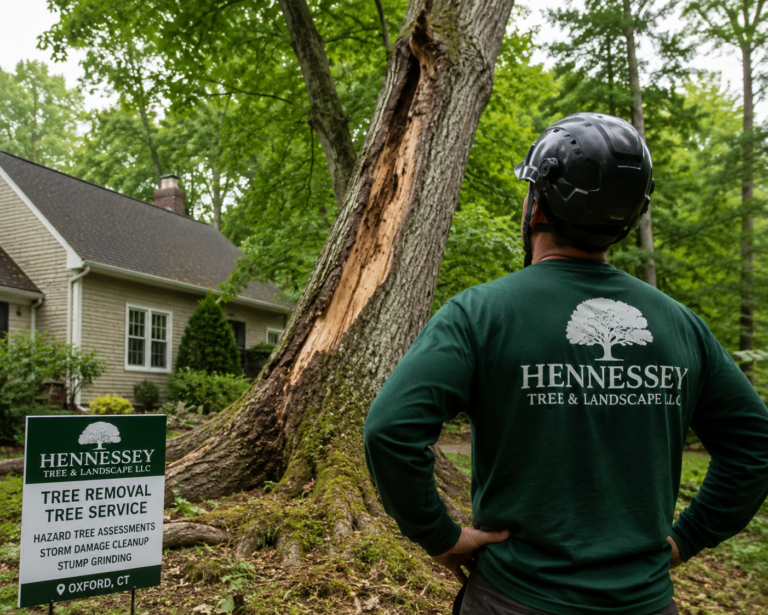
Whether you’re dealing with a single hazardous tree threatening your home or clearing multiple specimens for a landscaping project, the right approach combines strategic timing, proper contractor selection, and realistic budget planning. Winter tree removal discounts and bundled services like stump grinding deliver real savings without compromising the safety protocols that prevent injuries and property damage. While tree challenges may seem overwhelming when you’re standing in the yard looking up at a 60-foot oak leaning toward your roof, Hennessey Tree & Landscape CT brings decades of expertise to residential and commercial tree services throughout Connecticut. Their team of licensed arborists understands local regulations, efficient removal techniques, and yard restoration methods that leave properties in better condition than before. For professional tree assessment, removal, and landscape restoration services that balance affordability with quality results, contact Hennessey Tree & Landscape CT today to schedule a consultation and get a detailed written estimate for your specific project needs.