
Emergency Tree Removal in CT: What to Do First?
When a massive oak crashes across your driveway after an ice storm, your first thoughts probably aren’t about permits or tree wardens. Most Connecticut homeowners worry about one thing: how long will contractors tear up my yard with heavy equipment, and will those tracks and grinding scars ever heal? The answer depends on several factors unique to our state, including frost lines that run 42 to 48 inches deep, wetlands buffers that can extend 200 feet from water sources, and slopes that demand erosion controls. Connecticut’s tree removal process differs from other regions because our Tree Warden system adds an approval layer that protects both public safety and property owners. While the thought of crane trucks and wood chippers taking over your property feels overwhelming, certified arborists follow a predictable sequence from initial warden contact through final restoration that typically wraps up in one to two days for standard residential jobs. Your specific timeline will depend on whether your fallen tree sits on flat ground or near regulated wetlands, but understanding each phase helps you prepare for what comes next and keeps your yard damage contained.
Key Takeaways
- Most CT Tree Jobs Complete in 1-2 Days: Simple fallen trees on flat yards typically finish in one full day, while properties with slopes or wetlands may extend to two or more days depending on required erosion controls and terrain challenges.
- Tree Warden Contact Comes First: Connecticut law mandates contacting your local tree warden for hazard approval before removal begins, though emergencies can bypass some routine permits under CGS §7-131a.
- Preparation Secures Your Site: Early steps like calling 811 for utility marking, taking insurance photos, and getting warden evaluation help identify wetlands or slope issues before equipment arrives.
- Cutting and Grinding Happen Last: Crews use sectional cutting techniques to drop branches safely, followed by stump grinding 6 to 16 inches below grade, with cleanup and wood chips typically staying on-site or hauled away based on your preference.
- Permit Requirements Vary by Hazard Level: True emergencies often exempt routine permits, but wetlands reviews still apply if your tree sits within 75 to 200 feet of regulated areas.
- Yard Restoration Follows Standard Protocols: Professionals backfill stumps with topsoil, seed native grasses, and install erosion controls, with visible regrowth appearing within 4 to 6 weeks.
Understanding the Emergency Tree Removal Process in CT
Connecticut’s certified tree removal companies follow reliable sequences on Northeast properties where wooded yards, natural slopes, and detailed building codes prioritize safety and environmental protection over pure speed. Our state’s regulations consider factors like erosion prevention and wetlands buffers that other regions might overlook, making the process more thorough but also more predictable once you understand the steps.
The term “spite trees” appears in Connecticut law under CGS §52-480, which addresses structures or plantings installed specifically to annoy neighbors. If your fallen tree sits on a property boundary and disputes exist with neighbors, crews may need additional documentation or legal clearance before removal. Wetlands situations require silt fencing and sediment controls in regulated zones, adding equipment and time to jobs near streams, ponds, or wetland areas.
Local Tree Environment and Process Needs
Connecticut’s storm-prone climate, particularly ice storms and hurricanes, creates frequent emergency scenarios where large hardwoods like oaks and maples topple across properties. Regional regulations demand initial tree warden verification for tree heights and locations before cutting begins, especially on trees near roadways or public spaces. This verification process adapts based on terrain, with crane access becoming necessary on steep slopes or properties with limited equipment entry points.
Certified arborists assess factors like soil saturation, root damage, and leaning angles to determine the safest removal approach. Trees leaning toward houses or power lines require more complex rigging systems and longer setup times than trees falling in open yard spaces. Weather conditions also affect scheduling; frozen ground in winter can actually help protect lawns from equipment damage, while spring mud season creates the worst conditions for heavy machinery.
National vs. CT Removal Timelines
Standard tree removal timelines differ between Connecticut and other states due to our deeper frost lines, stricter wetlands regulations, and mandatory tree warden coordination for safe residential removals. While a homeowner in Texas might see a fallen tree removed in half a day with minimal regulatory oversight, Connecticut’s systematic approach adds protective layers that benefit long-term property health and environmental compliance.
Typical Timeline Ranges by Tree Size
National averages suggest small tree removal takes 4 to 8 hours, but Connecticut jobs typically span 1 to 2 full days when including stump grinding, complete cleanup, and slope stabilization measures. A medium-sized maple (30 to 60 feet tall) might take 6 to 8 hours for cutting and sectioning nationally, but add another 3 to 5 hours in Connecticut for grinding stumps below frost line depth and installing temporary erosion controls on sloped properties.
Large trees over 80 feet tall or specimens with extensive root systems near structures can extend to 2 or even 3 days when complex rigging, crane rentals, and wetlands compliance enter the picture. Emergency situations where trees block roadways or threaten immediate structural damage may receive expedited warden approval, but the physical work still requires careful sectioning to prevent further property damage.
Day-by-Day Breakdown Models
Most Connecticut emergency removals follow a two-phase model. Day one begins with tree warden contact and 811 utility marking, which typically takes 2 to 4 hours for scheduling and verification. Once approved, cutting and initial grinding can happen the same afternoon, consuming another 4 to 6 hours depending on tree size and complexity. Simple jobs on flat yards often complete in a single day, with crews finishing all phases from cutting through cleanup before leaving.
Day two becomes necessary on complex sites involving slopes over 15 percent grade, wetlands within regulatory distances, or multiple trees requiring removal. This second day focuses on final stump grinding to proper depth, installing silt fencing or erosion blankets, backfilling with topsoil, and seeding disturbed areas. Properties with significant wetlands involvement may need additional monitoring or third-day restoration work to satisfy local conservation commission requirements.
Key Steps in the Emergency Tree Removal Process
Professional tree removal companies break emergency jobs into distinct phases that keep your property safe while maintaining regulatory compliance. Understanding these phases helps homeowners prepare for each stage and communicate effectively with contractors about timing and expectations.
Site Preparation and Assessment
Your first call goes to the local tree warden, whose contact information appears on your town’s website or through Connecticut’s Department of Energy and Environmental Protection directory. Tree wardens hold authority under state law to evaluate whether your situation qualifies as an emergency requiring immediate attention or whether standard permitting applies. This initial conversation often happens by phone with same-day or next-day site visits for genuine hazards.
Call 811 (Connecticut’s Call Before You Dig service) at least two business days before work begins, though emergency situations may receive faster utility marking. Electric, gas, water, and telecommunications companies will mark underground lines with colored flags or paint, preventing dangerous equipment strikes during grinding operations. Secure the area around fallen trees with caution tape or temporary fencing to prevent children, pets, or neighbors from entering potential danger zones.
Take comprehensive photos and videos of the fallen tree, surrounding damage, and affected structures for insurance documentation. Capture images from multiple angles showing the tree’s position relative to your home, vehicles, fences, or other property features. These photos become important if disputes arise about coverage or if additional damage occurs during removal.
Certified arborists will walk the property to identify drop zones where cut sections can safely land without damaging landscaping, underground utilities, or structures. They stake these areas and may request that you move vehicles, outdoor furniture, or other belongings away from work zones. This assessment phase also flags potential wetlands or steep slopes requiring special handling before heavy equipment arrives.
Tree Sectioning and Felling
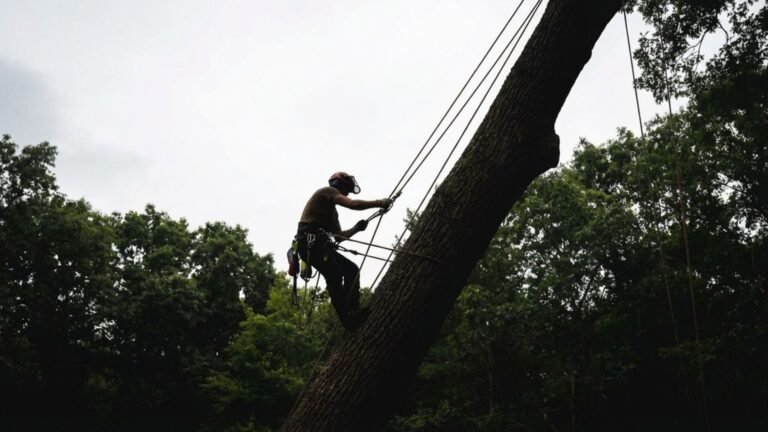
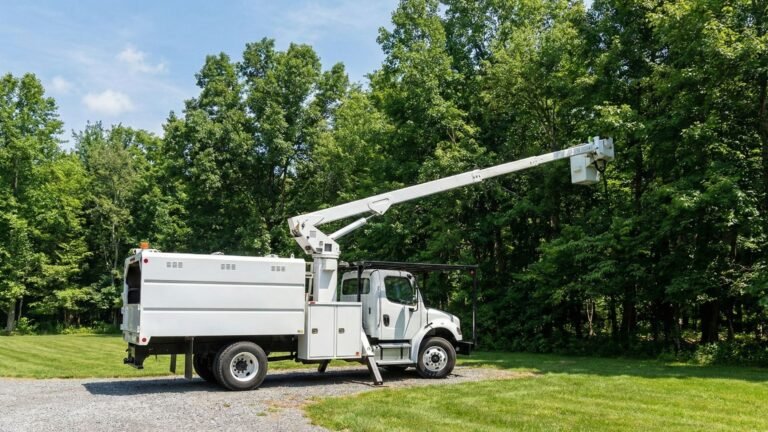
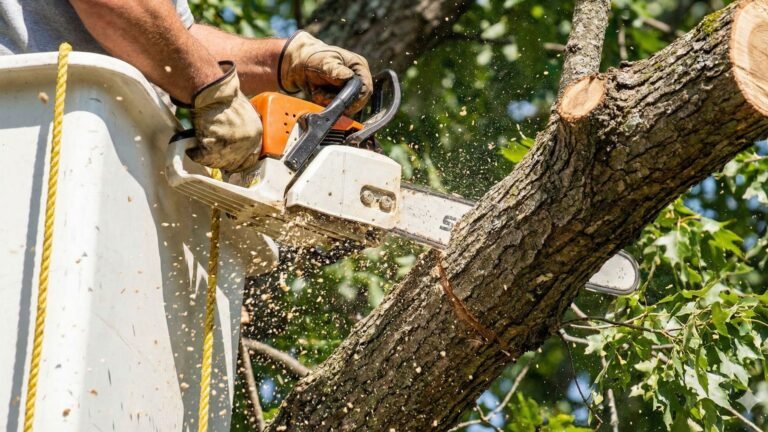
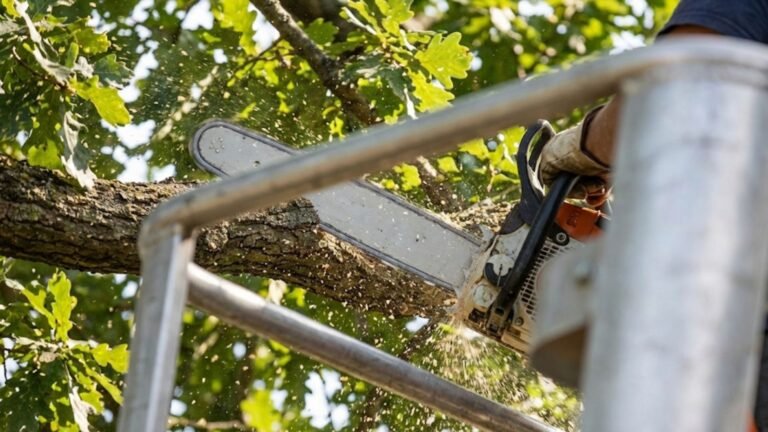
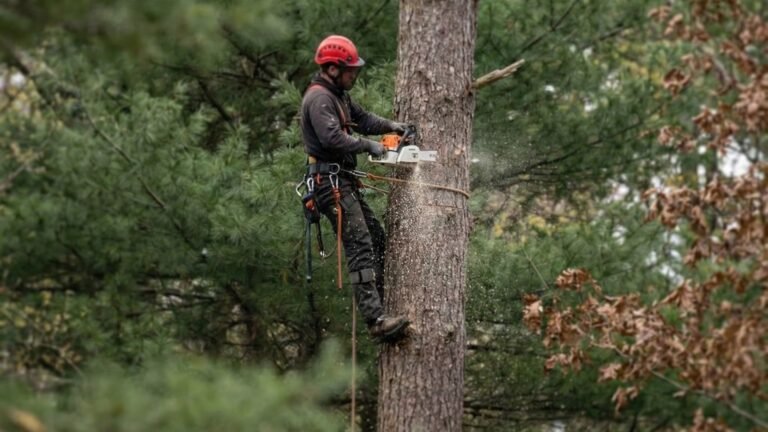
Professional crews use bucket trucks or cranes for controlled sectional cutting from the top down, starting with smaller branches and working toward the main trunk. This technique prevents large sections from free-falling and causing additional damage to your yard or nearby structures. Climbers equipped with safety harnesses and specialized saws remove upper branches in manageable pieces, lowering them via ropes to ground crews.
Ground teams immediately process fallen sections, cutting branches into moveable lengths and separating usable firewood from debris. This sectional approach minimizes the footprint of falling wood and allows crews to work efficiently even in tight residential spaces between houses or near property lines. Crane operations become necessary when trees lean over structures or when conventional climbing techniques pose safety risks due to structural instability.
Cutting continues until only the main trunk remains, which crews then section into 3 to 4-foot rounds for easier handling and processing. These trunk sections often get split on-site for firewood if you request it, or hauled away as part of debris removal. The entire cutting phase for a medium tree typically consumes 4 to 8 hours depending on height, branch density, and site access limitations.
Stump Grinding and Initial Cleanup
Stump grinding removes the visible trunk and root crown to depths of 6 to 16 inches below grade, which sits well above Connecticut’s 42 to 48-inch frost line but allows for lawn restoration. Professional grinders use carbide-tipped teeth on rotating wheels to chip stumps into mulch-like material, creating a depression where the tree once stood. This process takes 1 to 3 hours for typical residential stumps, with larger specimens or trees with extensive root systems requiring additional time.
Grinding depth matters because shallow grinds leave root masses that can heave during freeze-thaw cycles or interfere with replanting. Connecticut’s deep frost penetration means roots can shift soil even when buried several inches underground. Most professionals grind to 12 inches minimum for lawn areas where you’ll grow grass, but go deeper (16 inches or more) if you plan to plant another tree or install structures in the same location.
Wood chips generated during grinding typically stay on-site unless you request removal. These chips work well as mulch for garden beds or can fill the stump depression before topping with soil for lawn restoration. Crews rake or vacuum loose chips from surrounding grass, leaving your lawn relatively clean though with visible disturbance around the former stump location.
Additional Steps for Complex Removals
Connecticut’s varied terrain and environmental regulations create situations where standard removal procedures need supplementary steps. Properties with challenging features require extra time but also gain additional protection against erosion, utility damage, or regulatory violations that could create long-term problems.
Handling Slopes, Wetlands, and Utilities
Slopes exceeding 15 percent grade need silt fencing installed downhill from work areas before heavy equipment arrives. These temporary barriers catch sediment-laden runoff that could wash into storm drains, streams, or neighboring properties during and after tree removal. Crews stake fabric barriers into the soil, creating a permeable wall that filters water while blocking soil particles from leaving the site.
Wetlands buffers extend 75 to 200 feet from water sources depending on your town’s regulations, and tree removal within these zones may trigger Inland Wetlands Commission review even for emergencies. True hazards like trees actively falling toward homes often receive expedited approval, but contractors still need to document their work and install enhanced erosion controls. Expect one additional day for wetlands-adjacent jobs due to extra setup and monitoring requirements.
Trees near power lines require crane operations rather than climbers, since contact with electrical wires can prove fatal. Utility companies may need to temporarily disconnect or insulate lines during removal, adding scheduling complexity and potential delays. Connecticut homeowners should report trees leaning on or hanging near power lines to their utility company immediately, as these situations often qualify for company-funded removal when wires face immediate danger.
Finishing Touches and Yard Restoration
After stump grinding and major debris removal, contractors backfill depressions with topsoil to restore grade. Connecticut’s native soil types vary from rocky glacial till to sandy loam, so quality topsoil brings organic matter and proper drainage to disturbed areas. Crews typically mound soil slightly above the surrounding grade since settling occurs as organic material decomposes and soil particles compact.
Seeding follows with Connecticut-appropriate grass mixes, often containing fine fescue, perennial ryegrass, and Kentucky bluegrass varieties that tolerate our climate zones 5b to 6b. Straw mulch covers seeds to retain moisture and prevent erosion while germination occurs over the following 2 to 3 weeks. Slopes receive erosion blankets or jute netting staked into place, which biodegrades as grass roots establish and hold soil naturally.
Properties with significant disturbance may need multiple topdressing applications and overseeding through the first growing season. Full lawn restoration to match surrounding turf density typically takes 6 to 8 weeks under good growing conditions. Wet or shaded areas may take longer to fill in, while sunny spots with good drainage often show thick growth within 4 weeks of seeding.
Permits, Warden, and Regulations in CT
Understanding Connecticut’s regulatory framework prevents delays and potential fines during emergency tree removal. Our state balances property owner rights with environmental protection and public safety through a layered approval system that becomes more straightforward once you know the key contacts and trigger points.
Tree Warden and Utility Coordination
Every Connecticut municipality maintains a tree warden position responsible for public trees and hazard evaluation on private property when public safety concerns arise. Contact information appears on town websites, typically under the Public Works or Parks department listings. Tree wardens have authority to approve emergency removals that might otherwise require lengthy permitting, provided they verify the hazard claim through site inspection.
The 811 call-before-you-dig system operates statewide, connecting you to Connecticut’s One Call service that notifies all relevant utility companies of planned excavation work. Stump grinding counts as excavation since grinders can extend several feet underground, potentially striking gas lines, water mains, or fiber optic cables. Emergency situations sometimes receive same-day or next-day marking rather than the standard two-business-day wait, but contractors should verify utility locations before starting work regardless of emergency status.
Wetlands agencies operate at the town level through conservation commissions or inland wetlands boards. Trees within regulated areas may need permits even for hazard removal, though genuine emergencies often receive retroactive approval if contractors document their work and minimize soil disturbance. Always notify the wetlands agency before starting work on properties near streams, ponds, or mapped wetland areas to avoid violation notices that could delay restoration work or trigger fines.
What Homeowners Should Prepare For and Do
Active preparation helps tree removal proceed smoothly while protecting your property and maintaining good relationships with contractors. Understanding what to expect during each phase reduces stress and allows you to support the crew’s efficiency.
Daily Expectations During Removal
Day one brings equipment noise from chainsaws, wood chippers, and stump grinders that can reach 90 to 110 decibels, similar to lawn mower or motorcycle levels. Plan to avoid outdoor relaxation during work hours, and notify neighbors about the temporary disturbance. Heavy equipment like bucket trucks and cranes can weigh 40,000 pounds or more, creating temporary tracks in lawns even when crews use protective boards or plywood.
Restrict property access during active removal for safety. Flying wood chips, falling branches, and moving equipment create hazards for bystanders. Keep children and pets indoors or in secure areas away from work zones. Be available for contractor questions during initial walkthrough and warden visits, but give crews space to work once operations begin.
Expect restricted driveway or yard access while equipment occupies these spaces. Park vehicles on the street if your driveway provides the main equipment access route. Clear pathways of obstacles like bikes, toys, or lawn furniture before crews arrive. Note that some communities restrict tree work to specific hours, typically 7 AM to 6 PM on weekdays, with reduced or prohibited weekend work in residential zones.
Tips to Minimize Yard Disruptions
Move portable property items like grills, planters, and outdoor furniture away from work zones the day before removal begins. Document their locations with photos if you have specific restoration expectations for landscaping features. Inform contractors about underground irrigation systems, invisible dog fences, or landscape lighting that might not be obvious from surface inspection.
Request that crews place protective boards or thick plywood sheets under equipment paths if soil conditions are wet or if you’re concerned about lawn damage. These materials distribute weight and prevent deep rutting, though they add minor setup time. Some homeowners prefer equipment damage over the hassle of board placement, accepting that grass regrows within weeks while avoiding extra costs for protective measures.
Schedule removal during dry weather when possible, as saturated soil magnifies rutting and compaction from heavy equipment. Fall and winter work when ground is firm or frozen actually produces less lawn damage than spring or summer jobs during wet conditions. However, true emergencies don’t allow weather selection, making post-work restoration more important for jobs completed during unfavorable conditions.
Process Comparison Table: Simple vs. Complex Tree Removal in CT
| Phase | Simple Removal (Flat Yard) | Complex Removal (Slope/Wetlands) |
|---|---|---|
| Assessment/Prep | 1 to 2 hours for warden call and basic site review | 4 to 6 hours including warden inspection and wetlands coordination |
| Cutting/Grinding | 4 to 6 hours for medium trees using standard bucket truck access | 8 to 12 hours requiring crane setup and enhanced rigging for difficult access |
| Cleanup/Restoration | 2 to 4 hours for chip removal and basic site cleanup | 1 full day for erosion control installation and comprehensive seeding |
| Total Timeline | 1 full working day | 2 or more days depending on terrain and regulations |
This comparison shows how Connecticut’s environmental factors and regulatory requirements extend removal timelines beyond basic cutting and hauling. Simple jobs on accessible flat lots move quickly, while properties with challenging terrain or environmental sensitivity need additional protective measures that add time but prevent long-term damage to your property and surrounding areas.
Common Mistakes Homeowners Make During Tree Removal
Even well-intentioned homeowners can inadvertently complicate emergency tree removal through actions that seem logical but conflict with Connecticut regulations or safety protocols. Awareness of these common errors helps you avoid delays, fines, or safety incidents.
Skipping tree warden notification ranks as the most frequent mistake, sometimes resulting in stop-work orders or fines if neighbors report unpermitted tree removal to town officials. Even genuine emergencies benefit from quick warden contact, which can happen via phone and often results in same-day approval for hazardous situations. The warden call creates documentation protecting homeowners if disputes arise later about whether removal was necessary or properly authorized.
Failing to call 811 before stump grinding risks utility line strikes that can cause service outages, expensive repairs, or dangerous gas leaks and electrical shocks. Some homeowners assume that because utilities mark lines for initial construction decades ago, those markings remain accurate. Underground infrastructure shifts over time, and only current utility location prevents accidents during excavation work.
Taking insufficient insurance photos before removal begins can void claims or reduce settlements if insurers dispute the damage extent. Document the entire tree, not just the section touching your house or vehicle. Photograph surrounding property for context, and include shots showing the tree’s root structure if visible after toppling. Time-stamped images from multiple angles create stronger evidence than a single quick snapshot.
Ignoring slope and drainage issues during restoration leads to erosion that washes away topsoil, creates gullies, and damages neighboring properties. Homeowners sometimes request that contractors skip erosion controls to reduce costs, not realizing that the resulting soil loss costs far more to repair later. Connecticut’s clay soils compact easily when disturbed, creating runoff channels that worsen with each rainstorm if not addressed during initial restoration.
Preparing Your Property for Emergency Tree Removal in CT
Smart preparation before contractors arrive accelerates work and reduces complications. Taking these steps as soon as you identify a tree emergency sets the stage for efficient removal.
Contact your tree warden within hours of identifying the hazard, not days later after scheduling contractors. Many towns require warden approval before removal can legally proceed, and early contact prevents wasted contractor visits. Keep the warden’s contact information saved in your phone or posted near other emergency numbers for quick access during storm situations.
Call 811 immediately after warden contact, requesting expedited utility marking if your situation qualifies as an emergency. Provide accurate property address and specific location of the planned work (front yard, backyard, near property line). Utility companies typically mark within 48 hours for routine requests but may respond faster for documented emergencies.
Survey property boundaries if your fallen tree sits near lot lines, especially if neighbor relationships are strained or if historical disputes exist about tree ownership. Connecticut’s spite fence and spite tree laws under CGS §52-480 prohibit actions intentionally designed to annoy neighbors, and documented boundary surveys prevent accusations that removal damaged or improperly accessed adjoining property.
Clear access paths to the work area by moving vehicles from driveways, opening gates, and removing obstacles like trampolines or play equipment that might interfere with equipment positioning. Identify any underground irrigation systems, septic system components, or outdoor lighting wiring that contractors should know about before equipment arrives. Mark these features with temporary flags if their locations aren’t obvious.
Secure pets indoors or in areas completely separated from work zones. The noise, activity, and open gates during tree removal create escape opportunities, and contractors shouldn’t need to watch for loose animals while operating dangerous equipment. Notify neighbors on adjacent properties about the upcoming work, especially if equipment will need to access your backyard through side yards or if falling branches might affect their space.
Frequently Asked Questions About Emergency Tree Removal CT
Q: What is the first step in emergency tree removal in Connecticut?
A: Contact your local tree warden immediately for hazard approval through the town directory or ct.gov resources. The warden evaluates whether your situation qualifies as a genuine emergency requiring immediate action or whether standard permitting applies. This initial contact protects you legally and often results in same-day approval for trees posing imminent danger to structures or public safety. After warden notification, call 811 to mark utilities before any digging or grinding work begins.
Q: How long does stump grinding take during tree removal?
A: Stump grinding typically takes 1 to 3 hours to reach depths of 6 to 16 inches below grade, which allows for proper lawn recovery and prevents future issues with root heaving during freeze-thaw cycles. Larger stumps or specimens with extensive root systems may require additional time, while small ornamental trees can often be ground in under an hour. Connecticut’s deep frost lines mean grinding must reach sufficient depth to prevent future soil disruption, making our stump work slightly more involved than in warmer climates.
Q: Are permits needed for emergency tree removal in Connecticut?
A: Genuine emergencies creating imminent hazards often exempt routine permits, but wetlands review still applies if work occurs within regulated buffer zones. Trees actively threatening structures or blocking roadways can usually be removed immediately after tree warden approval, but contractors may need retroactive permits for work in environmentally sensitive areas. Always check with your town’s tree warden and wetlands agency to understand which approvals apply to your specific situation before work begins.
Q: What happens to my yard after tree removal?
A: Professional contractors backfill stump depressions with topsoil, seed with Connecticut-appropriate grass varieties, and install erosion controls on slopes. Visible regrowth typically appears within 4 to 6 weeks under favorable growing conditions, with full lawn density matching surrounding areas after 6 to 8 weeks. Temporary disturbance includes equipment tracks, bare soil around the former stump location, and mulched areas where wood chips were spread. Most homeowners find their yards return to normal appearance within two months of removal, though heavily disturbed areas on slopes may need additional seeding and monitoring.
Q: How can I minimize yard damage during tree removal?
A: Request that contractors use protective boards or plywood sheets under equipment paths, schedule work during dry weather when soil is firm, and choose companies that use modern equipment with lower ground pressure ratings. On-site wood chipping reduces the number of heavy debris trucks crossing your lawn, and sectional cutting techniques limit the impact zones where large branches land. Accept that some temporary disturbance is inevitable with emergency tree removal, but proper restoration techniques and quality topsoil can have your lawn looking normal within weeks of completion.
Final Thoughts
Connecticut homeowners facing emergency tree removal can expect predictable timelines and professional processes that balance safety, environmental protection, and efficient restoration. Most residential jobs complete within 1 to 2 days, accounting for our state’s frost depth requirements, wetlands regulations, and terrain challenges. The sequence from initial tree warden contact through final seeding follows established patterns that answer your most pressing question: what happens next and when will my property return to normal?
Understanding Connecticut’s regulatory framework and working with certified professionals protects your investment while meeting legal requirements. Contact Hennessey Tree & Landscape CT for emergency tree removal services backed by comprehensive knowledge of Connecticut regulations and proven restoration techniques. Their certified arborists handle everything from tree warden coordination through final cleanup, giving you peace of mind during stressful emergency situations. Reach out for a detailed assessment and transparent timeline specific to your property’s unique conditions.